
Introduction
A food dehydrator removes moisture from various foods, preserving them for extended periods while retaining their nutrients and flavor. Your favorite fruits, like apples, bananas, or strawberries, transform into chewy, intensely flavored snacks that burst with natural sweetness. Or imagine creating your savory jerky from thinly sliced strips of beef or turkey, marinated to perfection, and dried to a tender, satisfying texture.
But a food dehydrator isn’t just about preserving fruits and making jerky; it’s a versatile tool that opens up a world of culinary possibilities. You can dry herbs from your garden for homemade seasoning blends, create crunchy kale chips for guilt-free snacking, or even experiment with drying flowers and making potpourri.
A food dehydrator is like a culinary time machine, allowing you to capture the essence of fresh foods. It preserves them whenever your taste buds crave a burst of flavor, no matter the season. So, whether you’re a health-conscious snack enthusiast or an adventurous home chef, investing in a food dehydrator could be the secret ingredient to elevating your culinary creations to new heights.
Top Picks at a Glance
Types of Food Dehydrator
Stackable Tray Dehydrators
Depending on the model, these dehydrators consist of multiple trays that stack on each other, typically ranging from 4 to 10 trays. They’re usually compact and ideal for those with limited kitchen space. Stackable tray dehydrators are known for their versatility and affordability, making them popular among home users and beginners. They’re great for drying fruits, vegetables, herbs, and jerky. However, they may have limited temperature control and airflow compared to other types.
Shelf Tray Dehydrators
Shelf tray dehydrators feature trays that slide in and out like shelves in an oven. These dehydrators often have larger capacities and more advanced features. It makes them suitable for serious home cooks, food preservation enthusiasts, or small-scale commercial use. They offer better temperature control, airflow, and even drying thanks to their horizontal airflow design. Shelf tray dehydrators are versatile and can handle various foods, including fruits, vegetables, herbs, meats, and even flowers or crafts for drying.
Additionally, within these two main types, you may also come across specialized dehydrators tailored for specific purposes or with unique features:
Commercial Dehydrators
These are larger, heavy-duty dehydrators designed for commercial kitchens, food businesses, or enthusiasts who require high-capacity, continuous operation and professional-grade results.
Solar Dehydrators
These eco-friendly dehydrators harness the power of the sun to dry foods naturally. They’re ideal for off-grid living, outdoor enthusiasts, or those looking to reduce their carbon footprint.
Box Dehydrators
These dehydrators resemble a mini-fridge or microwave in appearance and typically have a front-loading design. They offer convenience and easy access to trays but may have limited capacity compared to shelf tray dehydrators.
6 Best Food Dehydrator
A food dehydrator offers many features and benefits that make it a valuable addition to any kitchen. It has adjustable temperature settings and even airflow distribution. It provides precise control over dehydration, ensuring consistent results every time.
This versatile appliance allows you to preserve various foods, from fruits and vegetables to meats and herbs. It extends their shelf life while retaining their nutritional value and natural flavors. By removing moisture from foods, a food dehydrator prevents spoilage and creates delicious, portable snacks like dried fruits, jerky, and crunchy veggie chips.
Moreover, using a food dehydrator reduces food waste, saves money on store-bought snacks, and empowers you to create healthier alternatives without additives or preservatives, with its ease of use, efficiency, and ability to unlock the full potential of fresh produce. A food dehydrator is indispensable for anyone looking to elevate their culinary creations and embrace a healthier lifestyle.
Buying Guide for Food Dehydrator
Capacity
Consider how much food you plan to dehydrate at once. A compact dehydrator might suffice if you’re a small household or occasional user. However, opt for a model with ample tray space for larger families or those who like to batch-prep.
Temperature Control
Look for a dehydrator with adjustable temperature settings. Different foods require different drying temperatures, so having control over this aspect ensures optimal results and versatility in your culinary endeavors.
Even Drying
Check if the dehydrator offers even air distribution and consistent drying across all trays. This feature prevents some parts of the food from becoming over-dried while others remain moist.
Ease of Use and Cleaning
Nobody wants a kitchen gadget that’s complicated to operate or a nightmare to clean. Look for user-friendly controls and removable trays that are dishwasher-safe for hassle-free maintenance.
Noise Level
Some dehydrators can be noisy during operation, which might be a concern if you have a small living space or prefer a quiet kitchen environment. Choose a model with a reputation for being relatively calm.
Durability and Build Quality
A food dehydrator is an investment, so ensure you’re getting one built to last. Read reviews and opt for models made from sturdy materials that can withstand frequent use without wearing down quickly.
Additional Features
Consider extra features that might enhance your dehydrating experience, such as timers, automatic shut-off functions, or even built-in air filtration systems.
Budget
Last but not least, consider your budget. Food dehydrators come in various prices, so determine how much you’re willing to spend and prioritize features accordingly.

COSORI CP267-FD
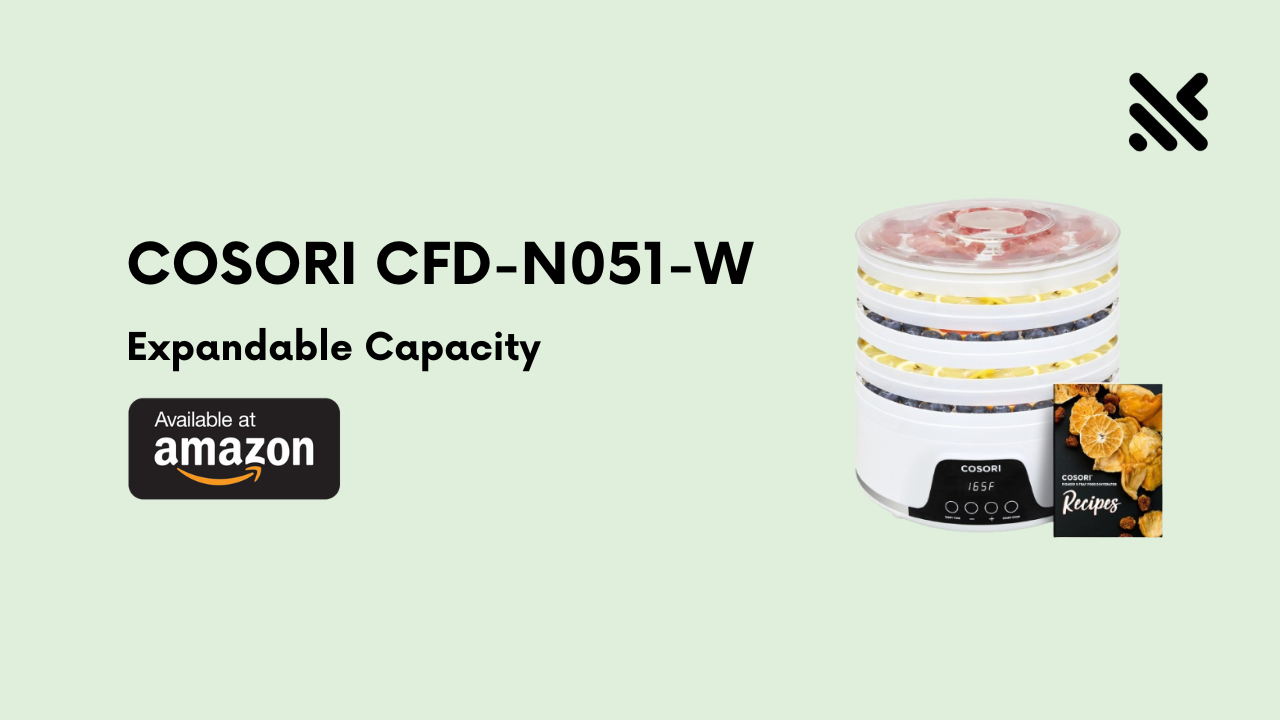
COSORI CFD-N051-W

Elite Gourmet EFD319

Commercial Chef CCD100W6

Chefman B07B9KZXLS