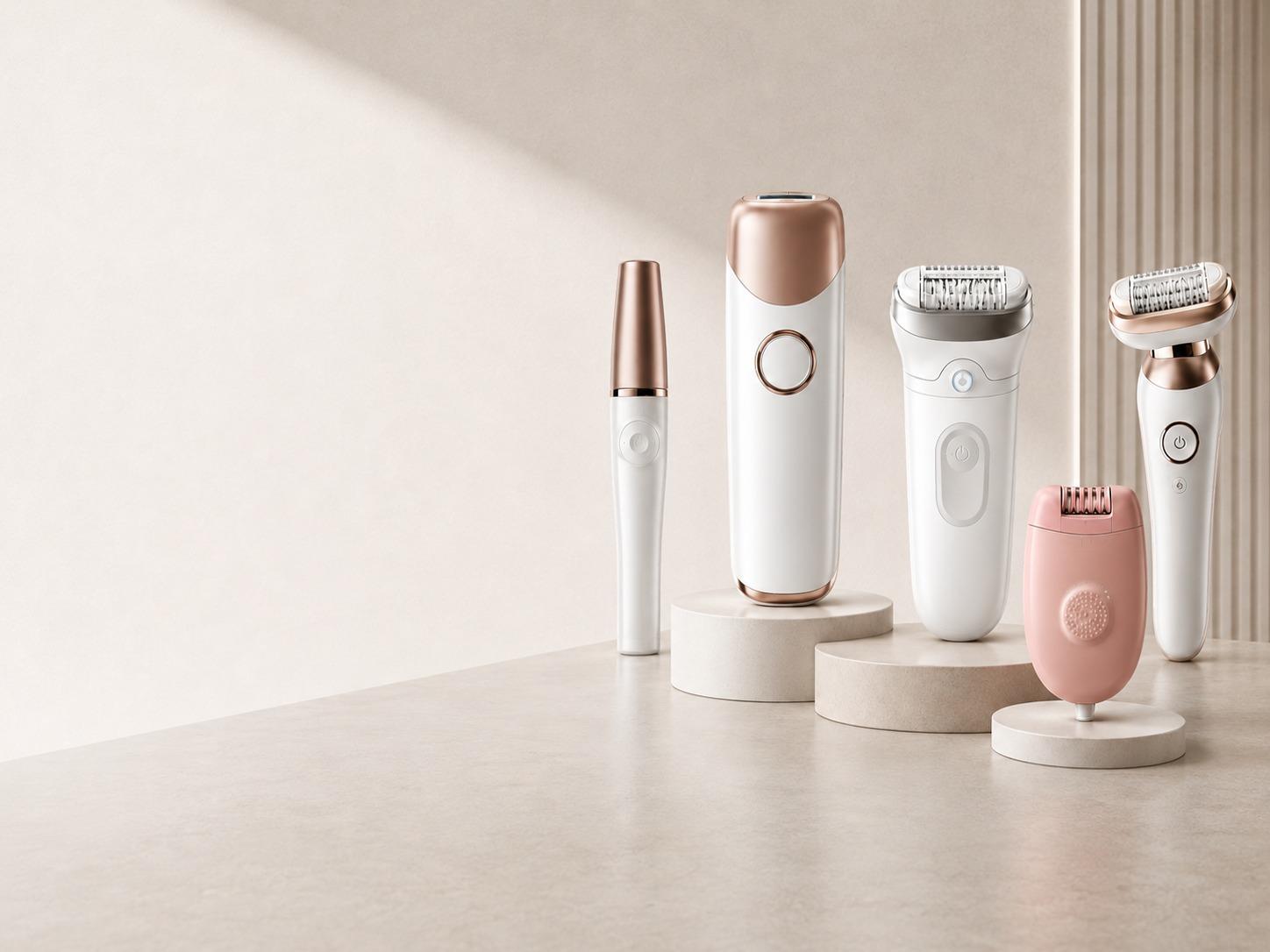
Which matters most when you choose the best epilator: a head that follows curves, wet use, a larger kit, or the lowest cost? The answer starts with the area you'll treat most often. A larger bundle or a higher tweezer count isn't automatically a better buy.
A fully flexible head matters most for knees, ankles, and other curved areas. A simpler head may be enough for legs, and a corded model skips charging. For facial hair, choose a smaller device approved for the face. Don't assume a body epilator is suitable.
WhoAdvice checked each model's manufacturer documentation and current retail listing, and reviewed recurring owner-reported patterns. Each pick below names who it suits and the limitation that could change your mind.
Top 3 epilator picks#
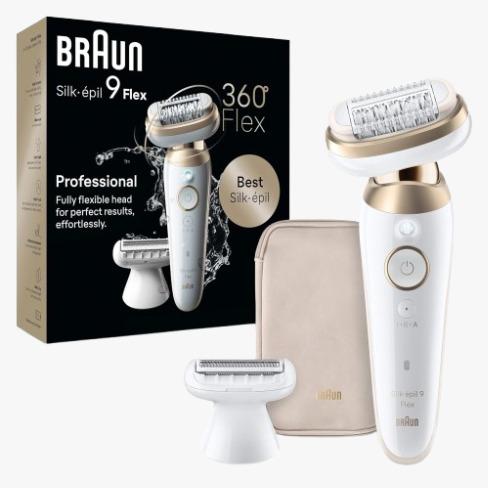
Braun Silk-épil 9 Flex SES9-041
“Choose it when knees, ankles, and other curves matter most, because Braun built its fully flexible head for curvy areas. If you also want a separate body trimmer, the Silk-épil 9 body-grooming kit includes one.”
Check Price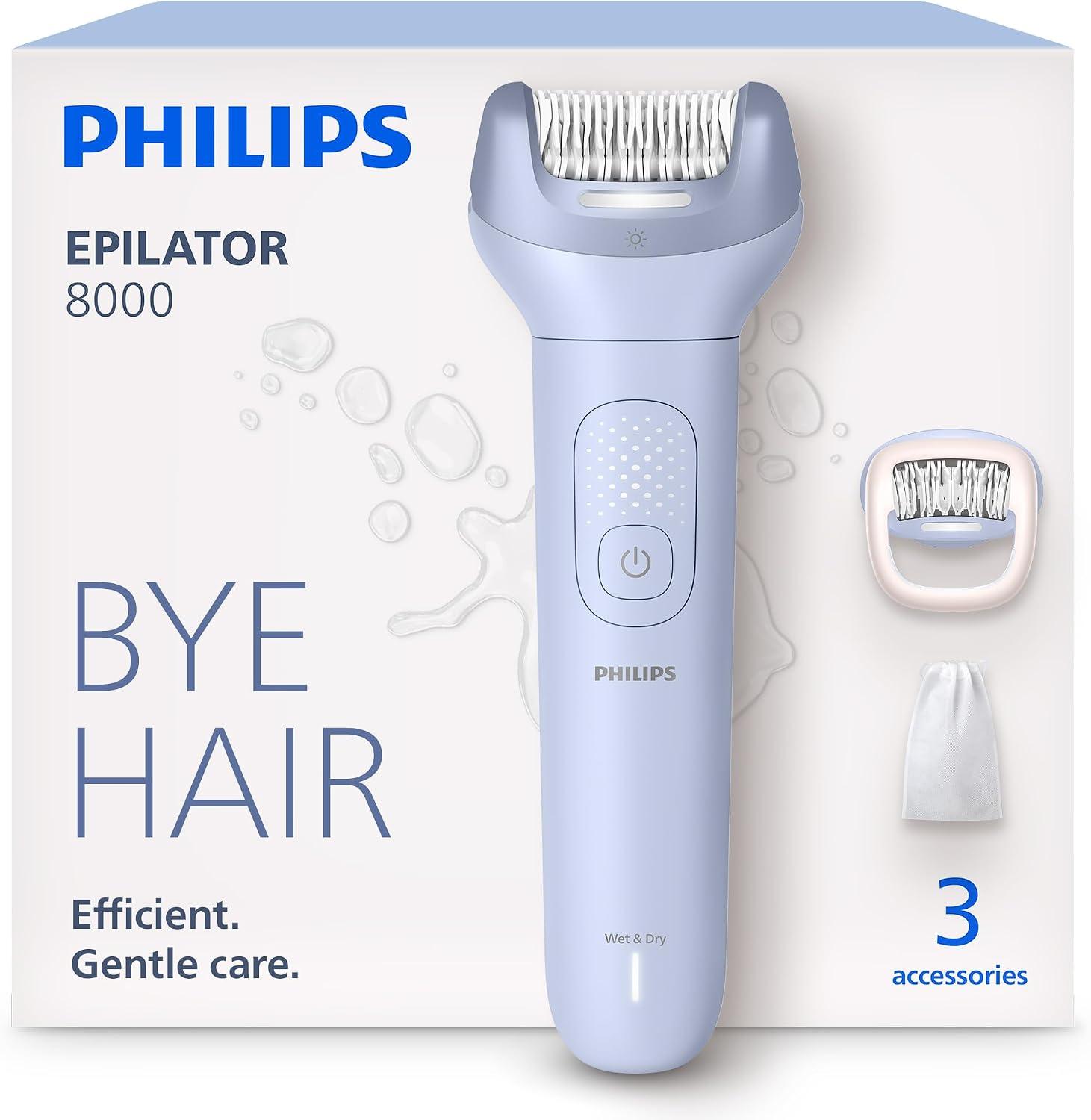
Philips Epilator Series 8000 BRE708/00
“Choose it for ProGuide, which Philips says holds the epilator at the correct 75° angle, in a three-piece kit. If you want shaving, trimming, or pedicure heads too, the Series 9000 adds them.”
Check Price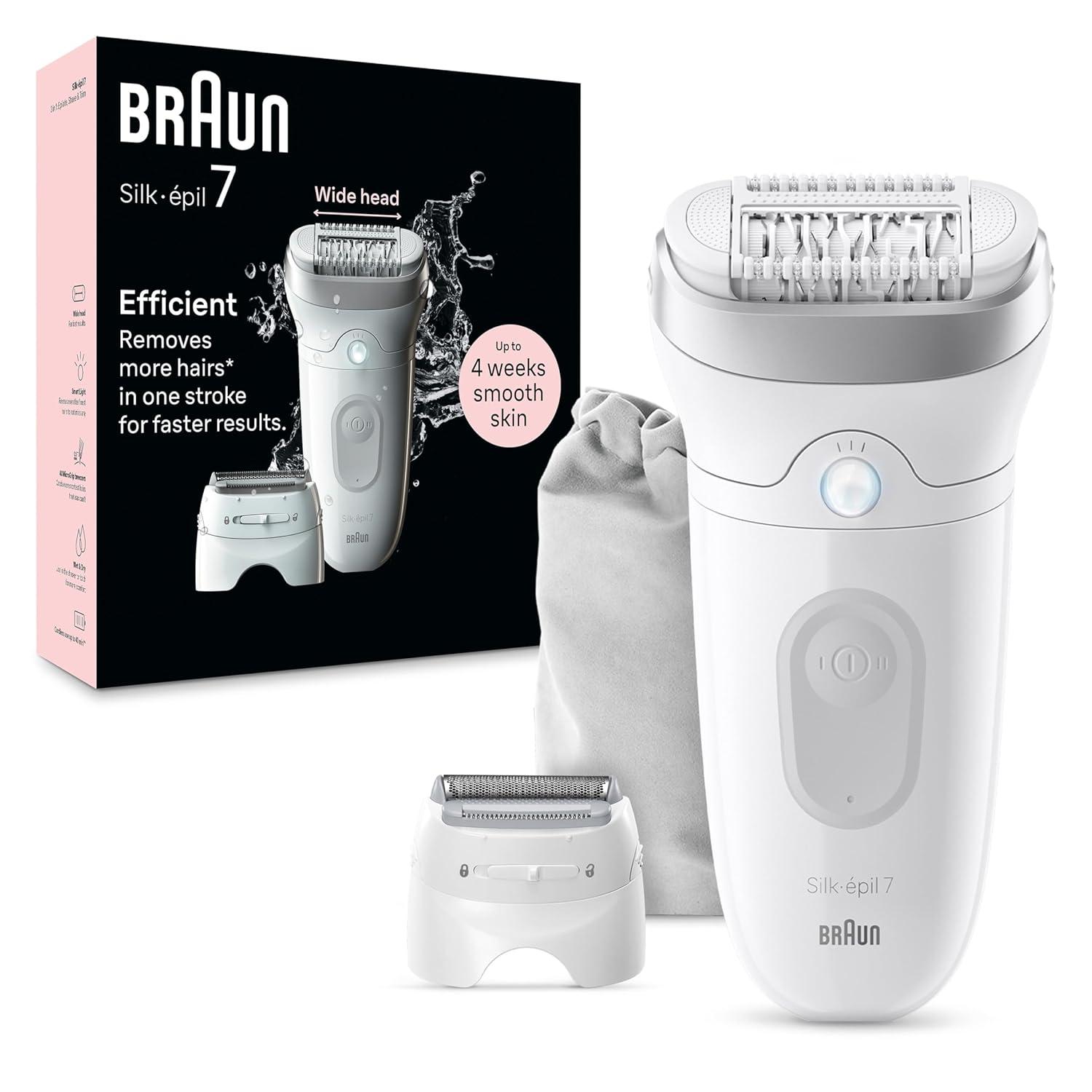
Braun Silk-épil 7 SE7-041
“Braun says its wide head removes more hair per stroke than the Silk-épil 5's, which suits legs and arms. The tradeoff is runtime: about 40 minutes, against 50 to 60 for the other cordless picks.”
Check PriceBest epilators compared#
| Product | Editorial badge | Power and use | Head and control | Key inclusions | Main tradeoff | Check |
|---|---|---|---|---|---|---|
| Braun Silk-épil 9 Flex SES9-041 | Best Overall | Rechargeable; wet/dry; up to 50 minutes | 40 tweezers; fully flexible head; Smart Touch | Shaver head, trimmer comb, skin-contact cap | No separate body trimmer | Check Price |
| Philips Epilator Series 8000 BRE708/00 | Best Streamlined ProGuide Kit | Rechargeable; wet/dry; up to 60 minutes | 32 ceramic tweezers; ProGuide; two speeds; LED | Epilator head, ProGuide, pouch | Three-hour charge; no shaving or trimming heads | Check Price |
| Braun Silk-épil 7 SE7-041 | Best Wet/Dry Braun for Legs | Rechargeable; wet/dry; about 40 minutes | 40 tweezers; wide head; two speeds; massage rollers | Shaver head, trimmer comb, skin-contact cap, brush, pouch | Shortest runtime of the cordless picks | Check Price |
| Philips Epilator Series 9000 BRE728/00 | Best Full Kit | Rechargeable; wet/dry; up to 60 minutes | 32 ceramic tweezers; ProGuide; two speeds; LED | Nine pieces, including shaving, bikini-trimmer, and pedicure heads | Costs more than the Series 8000 | Check Price |
| Braun Silk-épil 9 SES9-441 | Best Body-Grooming Kit | Rechargeable; wet/dry; up to 50 minutes | Wide pivoting head; precision handle | Body trimmer, shaver head, trimmer comb, skin-contact cap | Pivoting head is less adaptable than the Flex | Check Price |
| Philips Epilator Series 2000 BRE227/00 | Best Corded Epilator | Corded; dry use | One speed; massage cap | Massage cap, cleaning brush | Cord restricts movement; no shower use | Check Price |
| Braun Silk-épil 3 3-270 | Best Budget Braun Kit | Corded; dry use | 20 tweezers; massage rollers | Shaver head, trimmer cap | Half the tweezers of the other Braun picks | Check Price |
Best epilator reviews#
Braun Silk-épil 9 Flex SES9-041
The Silk-épil 9 Flex is the pick for curved areas. Braun says its fully flexible head is made for curvy spots like knees and ankles, and it carries 40 MicroGrip tweezers. A shaver head and trimmer comb come in the box, so it also shaves and trims without a large kit.
Philips Epilator Series 8000 BRE708/00
The Series 8000 is built around ProGuide, an attachment Philips says stretches the skin and keeps the epilating head at the correct 75° angle. That may help if you're still learning the technique. The kit stops at the epilator head, ProGuide, and a pouch, so there's nothing extra to store.
Braun Silk-épil 7 SE7-041
The Silk-épil 7 is Braun's wet/dry pick for broad areas. Braun says its wide head removes more hair per stroke than the Silk-épil 5's, which suits legs and arms. It skips the Silk-épil 9's flexible and pivoting heads, so curves take more repositioning.
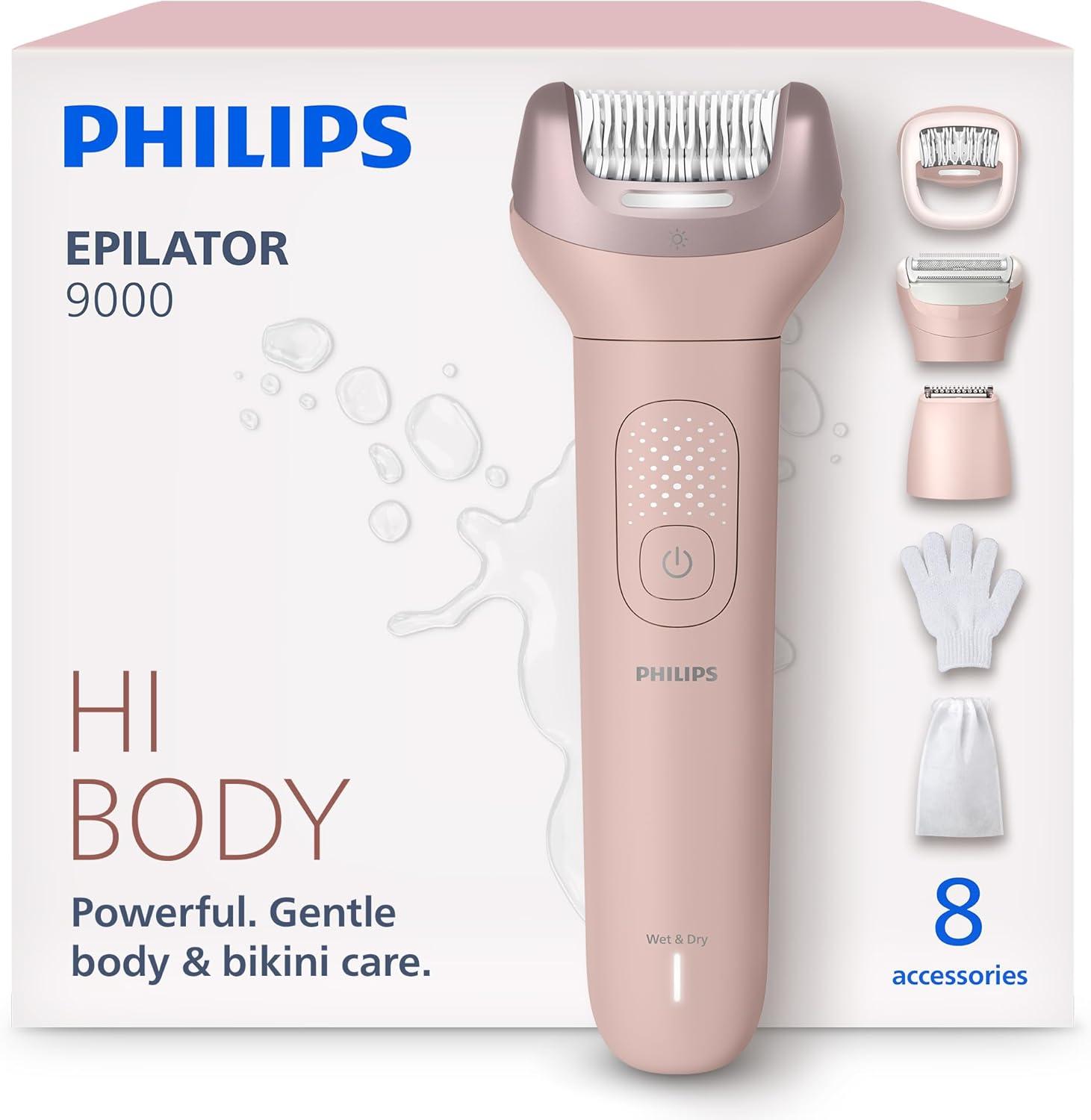
Philips Epilator Series 9000 BRE728/00
The Series 9000 has the same epilator as the Series 8000, from the 32 ceramic tweezers and ProGuide to the 60-minute stated runtime. The difference is the kit. Philips counts nine pieces, including shaving, bikini-trimmer, and pedicure heads and a body exfoliation brush.
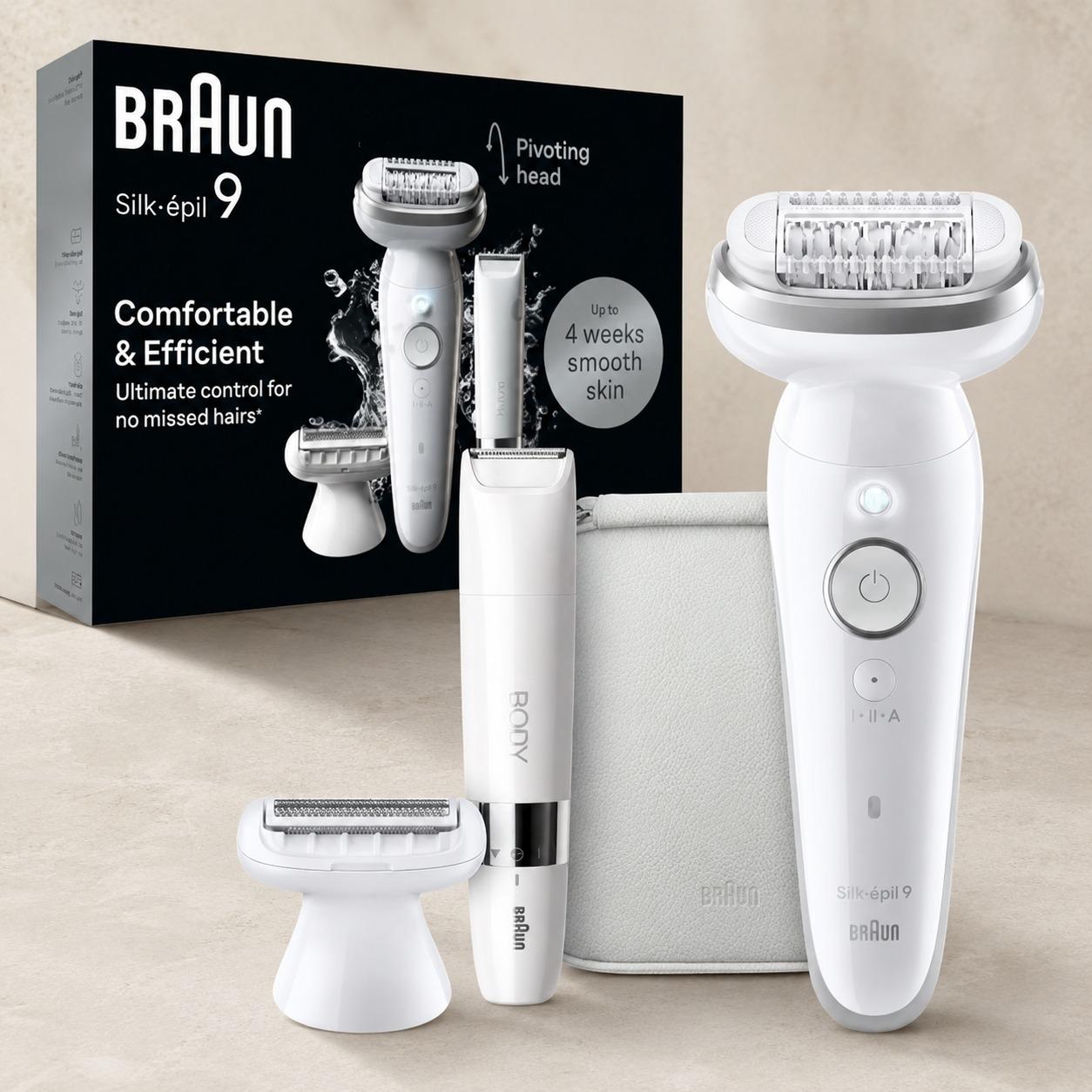
Braun Silk-épil 9 SES9-441
This Silk-épil 9 kit swaps the Flex's fully flexible head for a wide pivoting head and adds a body trimmer. One purchase covers epilating, shaving, and body trimming. Braun states up to 50 minutes of wet or dry use and says the precision handle keeps control when wet.
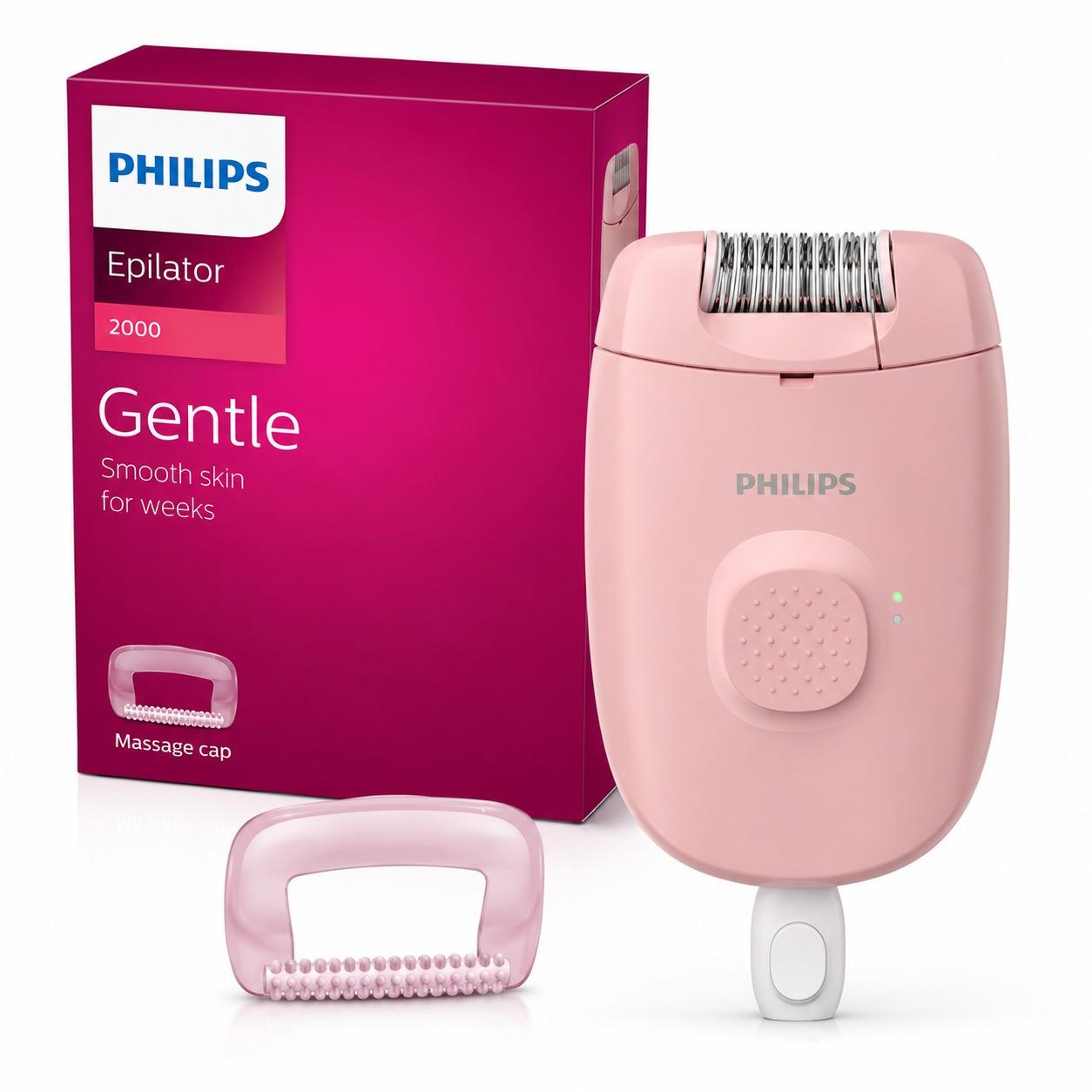
Philips Epilator Series 2000 BRE227/00
The Series 2000 keeps things simple. It runs from the power cord, it's for dry use only, and it has one speed. Philips' manual approves it for legs, underarms, and the bikini line.
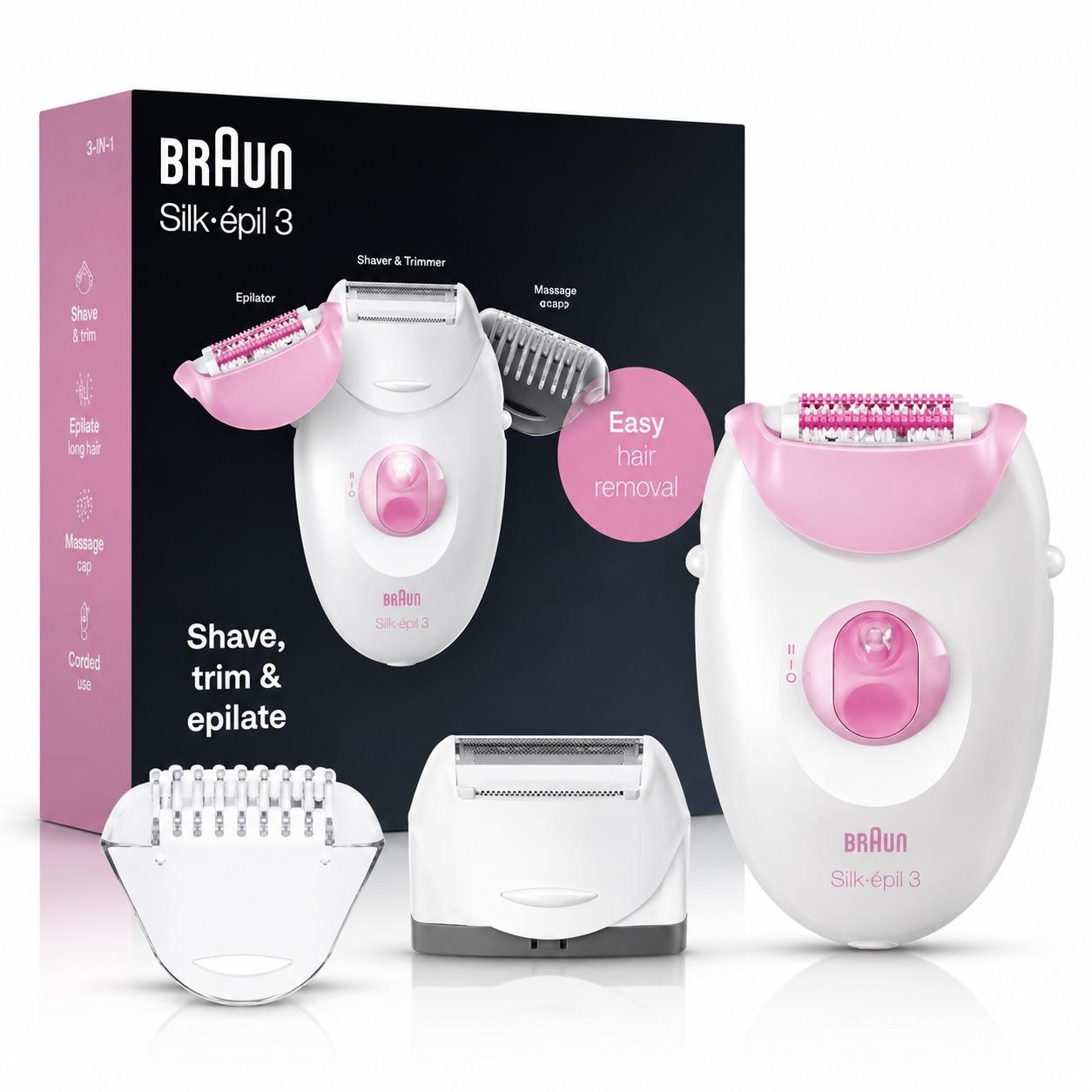
Braun Silk-épil 3 3-270
The Silk-épil 3 is Braun's corded, dry-use kit. It pairs massaging rollers with a shaver head and trimmer cap, so it epilates, shaves, and trims. Braun gives the Silk-épil 3 range 20 tweezers, half the count of the other Braun picks.
How we ranked the best epilators#
This is a research-based ranking. WhoAdvice didn't run laboratory or hands-on tests. We compared each model's manufacturer documentation, intended use, head design, controls, power, package contents, and recurring owner-reported patterns. A product had to be available through our affiliate retailer to be included, but that didn't affect its rank or verdict.
We set these weights before assigning awards:
- 25% — Epilation design and body-area fit.
- 20% — Head control, maneuverability, and useful settings.
- 15% — Wet/dry flexibility, power, runtime, and charging.
- 15% — Exact product documentation, safety, cleaning, and support.
- 10% — Useful attachments and package distinction.
- 10% — Value relative to nearby alternatives.
- 5% — Current US availability and support.
Recurring owner-reported patterns helped us spot usability questions but didn't get a separate score. A wide head or a high tweezer count earned credit only when it improved area fit, coverage, precision, or handling.
Runtime and design figures are the manufacturers' own statements, not independently verified performance. Where retailer listings conflicted with the manufacturer, we used the manufacturer's documentation.
We judged each model against the other six, not against a fixed standard. A feature earned credit only when it made a clear difference to the buyer. Unnecessary package complexity, restricted movement, and weak area fit counted against a model.
Types of epilators#
“Type” can describe how an epilator grips hair, how it receives power, the area it's built to treat, or the way its head moves. Keeping those decisions separate makes comparisons more useful than one long list of overlapping labels.
Type shortcut: Start with treatment area, then choose power, and only then compare head movement. If a model fails the area check, its runtime and attachment count no longer matter.
Types by mechanism#
Tweezer-style epilators
Rotating rows of metal or ceramic plates grip several hairs at once. They suit regular leg and arm sessions, but a higher tweezer count doesn't guarantee fewer passes or less discomfort.
Spring epilators
A bent coil traps and pulls hair. Manual spring tools such as the Bellabe Original Facial Hair Remover need no battery, but they're too slow for large areas.
Types by power and use#
Cordless wet/dry epilators
Without a cord, they're easier to position, and they can go in the shower when the manual allows it. They need charging, and the manual decides whether they can run while plugged in.
Corded dry epilators
Continuous power suits sessions near an outlet, as with the Philips Series 2000 and Braun Silk-épil 3. The cord restricts movement, and they aren't for shower use.
Replaceable-battery epilators
A standard battery removes the charging cable. The Remington Smooth & Silky Facial Epilator EP1050FCDN, for example, runs on one AA. They suit small areas and occasional use, but you'll need to replace batteries over time.
Manual epilators
There's no charger to manage and no runtime limit. They suit brief facial touch-ups, but progress and pressure depend on your hand, so they're impractical for broad body coverage.
Types by treatment area#
Facial epilators
A narrow working area gives control around manufacturer-approved parts of the upper lip, chin, cheeks, or jawline. They're slower than body devices. Face-first shoppers should start with our facial epilator guide.
Body epilators
They're made for legs and arms, but the manual still decides whether smaller zones such as underarms are approved.
Bikini and precision formats
A narrower head or cap is meant for small areas. Check the manual for pubic-hair and bikini-line permission. An attachment named for the bikini line isn't proof the manual approves that area.
Types by head design#
Fixed heads
They're the simplest design and work well on flatter areas. Around knees, ankles, and other curves, you'll adjust the angle yourself.
Pivoting heads
They add controlled movement over a fixed design, a middle step below fully flexible heads. The Silk-épil 9 body-grooming kit (SES9-441) pairs one with a wide head.
Fully flexible heads
They adapt in more directions, which can make contact easier around knees and ankles. The Silk-épil 9 Flex (SES9-041) uses one, and it follows curves more closely than the pivoting body-grooming kit.
Wide heads
They cover more skin per pass, so legs and arms need less repositioning. Small or curved areas reward a narrower head that's easier to place.
Precision heads and caps
They shrink the active area, which makes placement easier on approved small or curved zones. Coverage is slower, so they make more sense for touch-ups than for full legs.
How to choose the best epilator#
Work through these checks in order. A model that fails an early one isn't worth comparing on the later ones.
Fit and format#
Treatment area
Confirm the manual approves each area you'll treat, especially the face. Philips' manuals approve underarms and the bikini line on the Series 2000, 8000, and 9000. For the Braun picks, check the manual.
Epilator type
For regular body sessions, a powered tweezer-style model is the practical default. Choose a manual or battery precision device only for occasional facial touch-ups.
Wet/dry and power
Pay for wet/dry only if shower use or cord-free positioning will improve your routine. Wet use doesn't make an epilator remove more hair. Near an outlet, a corded dry model is often the clearer value.
Handling and comfort#
Head design
Match the head to the areas you treat most. Neither width is better for everyone. Legs and arms favor wide coverage, while curved or small areas favor a head that's easy to place.
Speed and comfort controls
Two speeds can help with different areas or a cautious first pass. Massage caps change skin contact, LEDs help reveal fine hair, and some models discourage pressing too hard. None removes discomfort.
Ownership and upkeep#
Battery and charging
Make sure the stated runtime covers a full session, then note the charge time. USB charging, an included adapter, replaceable batteries, and use while plugged in all vary by model.
Attachments
Count an attachment only if it replaces a tool you'd otherwise buy, like a shaver head or trimmer. Compare exact package contents, because similar model names can ship different accessories.
Cleaning and support
Check which parts are washable, since wet/dry approval doesn't cover every accessory. Before buying, confirm the warranty and that replacement heads or caps are sold for your exact model.
Safety and alternatives#
Safety
Before buying, read the manual's warnings on approved areas and wet use. Do not use an epilator on broken, inflamed, or infected skin, and get professional advice if a condition affects your skin.
Epilator vs. IPL
An epilator pulls hair from the root and doesn't rely on hair pigment. IPL (intense pulsed light) uses light to reduce regrowth and has eligibility limits. Shaving cuts at the surface, while waxing also pulls from the root.
What to expect from epilation#
Epilation can be uncomfortable, and the experience varies by person and body area. It may ease with practice for some people, but not for everyone. Wet use can make a routine more flexible, but it doesn't remove discomfort or improve results.
The Philips user manual for the Series 8000 and 9000 says some initial skin irritation can occur. It prohibits use on damaged, inflamed, irritated, healing, or disease-affected skin. It also says to keep the device moving, avoid going over one spot too many times, and clean the product after each use. Check your own model's manual for its rules.
When an epilator misses or breaks hairs, start with the manufacturer's checks rather than assuming the motor is weak. Philips' troubleshooting guidance for the Series 8000 and 9000 covers hair length, skin tension, angle, slow movement, full head contact, and a clean epilation head. The manual also says worn or damaged parts should be replaced.
Plucking can lead to ingrown hairs, according to the NHS guidance on ingrown hairs. Do not pick or squeeze them. Get professional advice for recurrent or severe ingrown hairs, persistent irritation, a skin condition, or painful, hot, swollen, or pus-filled bumps. To compare epilation with other hair-removal methods, see the American Academy of Dermatology's overview.
Frequently asked questions about epilators
Is an epilator worth buying if I'm prone to ingrown hairs?
It may not be worth buying if root removal keeps causing inflamed or painful ingrown hairs for you. Epilation suits some routines, but neither exfoliation nor a premium device guarantees prevention. The ingrown-hair advice above covers what to avoid and when to get professional advice.
Is it better to epilate wet or dry?
Neither is better for everyone, and your manual decides which you can use. Philips says dry use may remove hair more effectively because wet hairs can stick to the skin. A recurring owner-reported pattern is that approved wet use feels more comfortable.
Why does an epilator break hairs instead of pulling them from the root?
Hair may break when its length, the device angle, movement speed, pressure, or head condition doesn't match the manual's guidance. Start with the troubleshooting checks above before assuming the device is faulty.
Does epilator discomfort decrease with regular use?
It may become more manageable for some users, but discomfort doesn't decrease for everyone. Practice can improve positioning and pacing. Body area still matters: an acceptable leg routine doesn't predict comfort on the upper lip, underarms, or bikini line. Stop if you feel severe pain or notice a worrying skin reaction.
Can I use the same epilator on my face, underarms, and bikini line?
Only if the exact device and attachment are approved for every area you plan to treat. A body epilator isn't automatically safe for the face, so compare dedicated facial epilators if the face comes first. For the underarms and bikini line, check the manual and use the specified cap.
Are wet/dry epilators worth paying more for?
They're worth it when shower use, cordless handling, or rinseable cleanup solves a real problem in your routine. If you epilate dry near an outlet, a corded model such as the Philips Series 2000 skips charging entirely.
Which epilator is best?#
Treatment area and head control should decide the purchase. For knees, ankles, and other curves, the Braun Silk-épil 9 Flex is the strongest overall fit because its fully flexible head adapts best. If you also want a separate body trimmer, choose the Silk-épil 9 body-grooming kit (SES9-441) instead. For Philips wet/dry features in a smaller kit, choose the Series 8000. For every attachment, choose the Series 9000. The Braun Silk-épil 7 gives you Braun wet/dry use without the Flex head. If you epilate dry near an outlet, the corded Philips Series 2000 skips charging. If cost comes first, it and the corded Braun Silk-épil 3 are the budget picks, though neither can go in the shower.