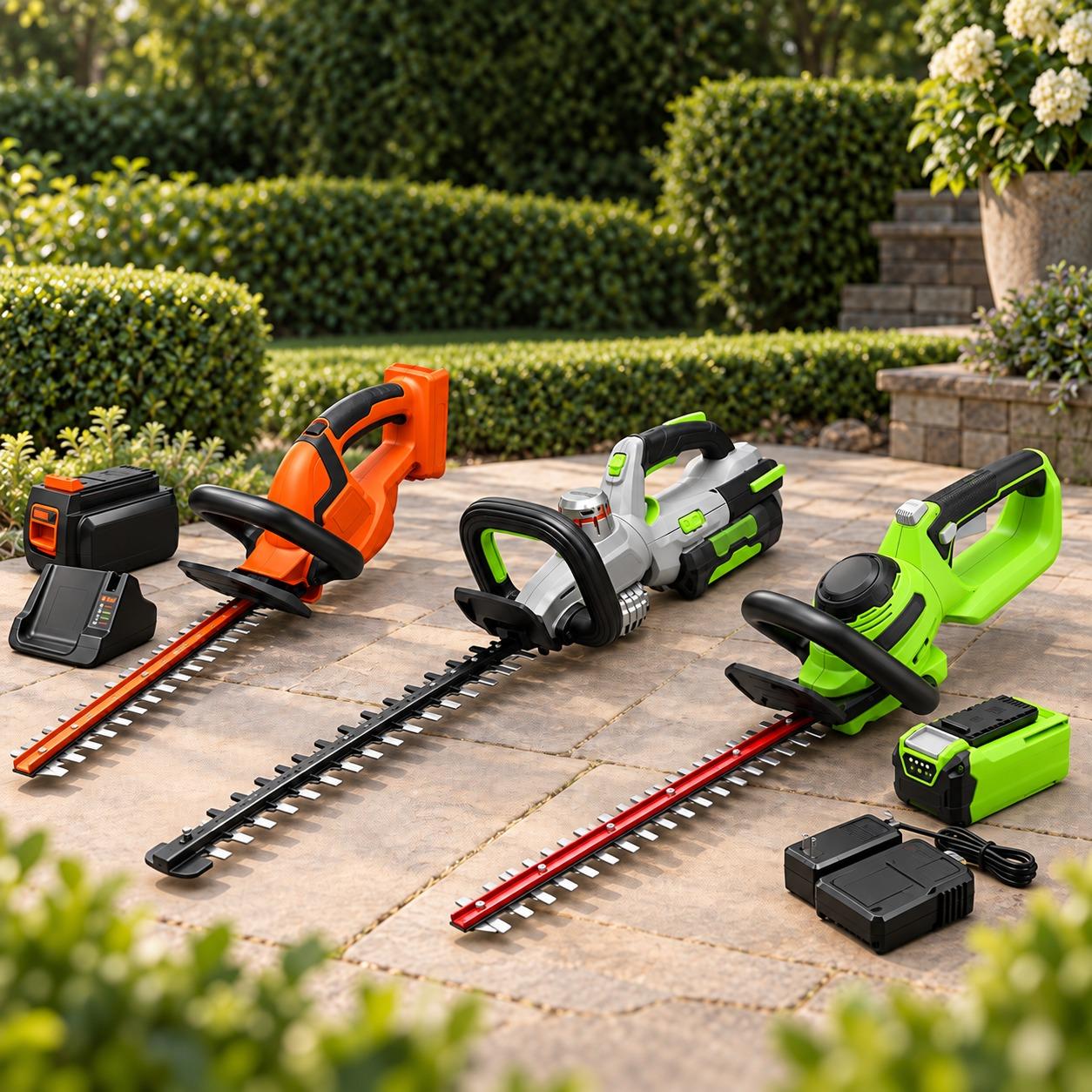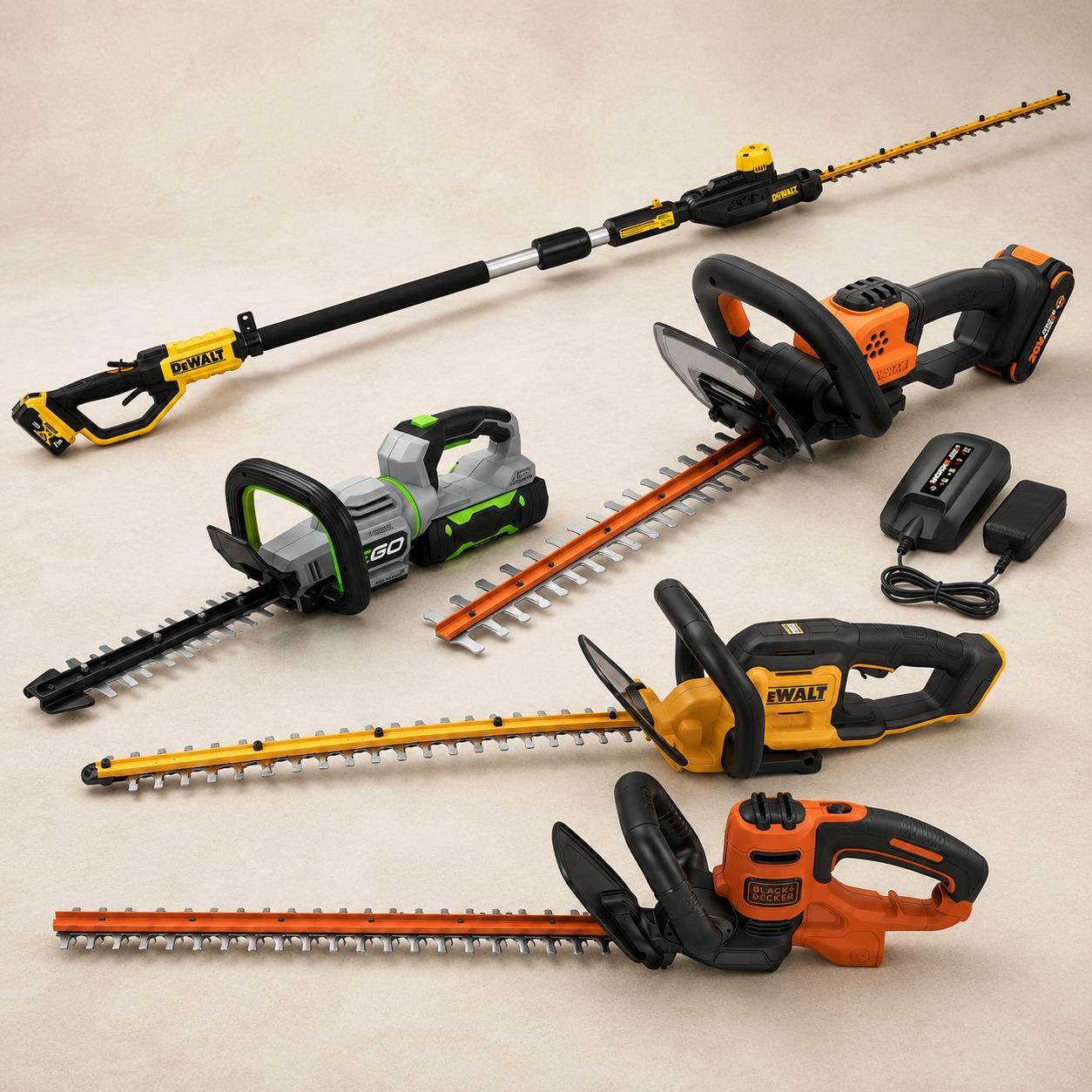
The best hedge trimmer for your garden depends on three practical factors: the size of your hedges, their height, and your access to power. A small shrub needs a tool that is easy to control; a long blade saves passes on a broad boundary, and a tall hedge may require a pole trimmer for extra reach. Power access also affects the choice: a corded model works best when there is a clear route between the outlet and the area you need to trim.
Do not judge a hedge trimmer by blade length alone. A longer blade covers more of the hedge in each pass, but it can be harder around compact shrubs. Weight becomes especially noticeable when you are working at chest or shoulder height, so check whether the listed figure includes the battery. For cordless models, compare complete-kit prices rather than matching a bare-tool price to a package that includes the battery and charger.
WhoAdvice created this research-based guide by comparing exact models, manufacturer specifications and manuals, package contents, warranty support, current availability, and recall records.
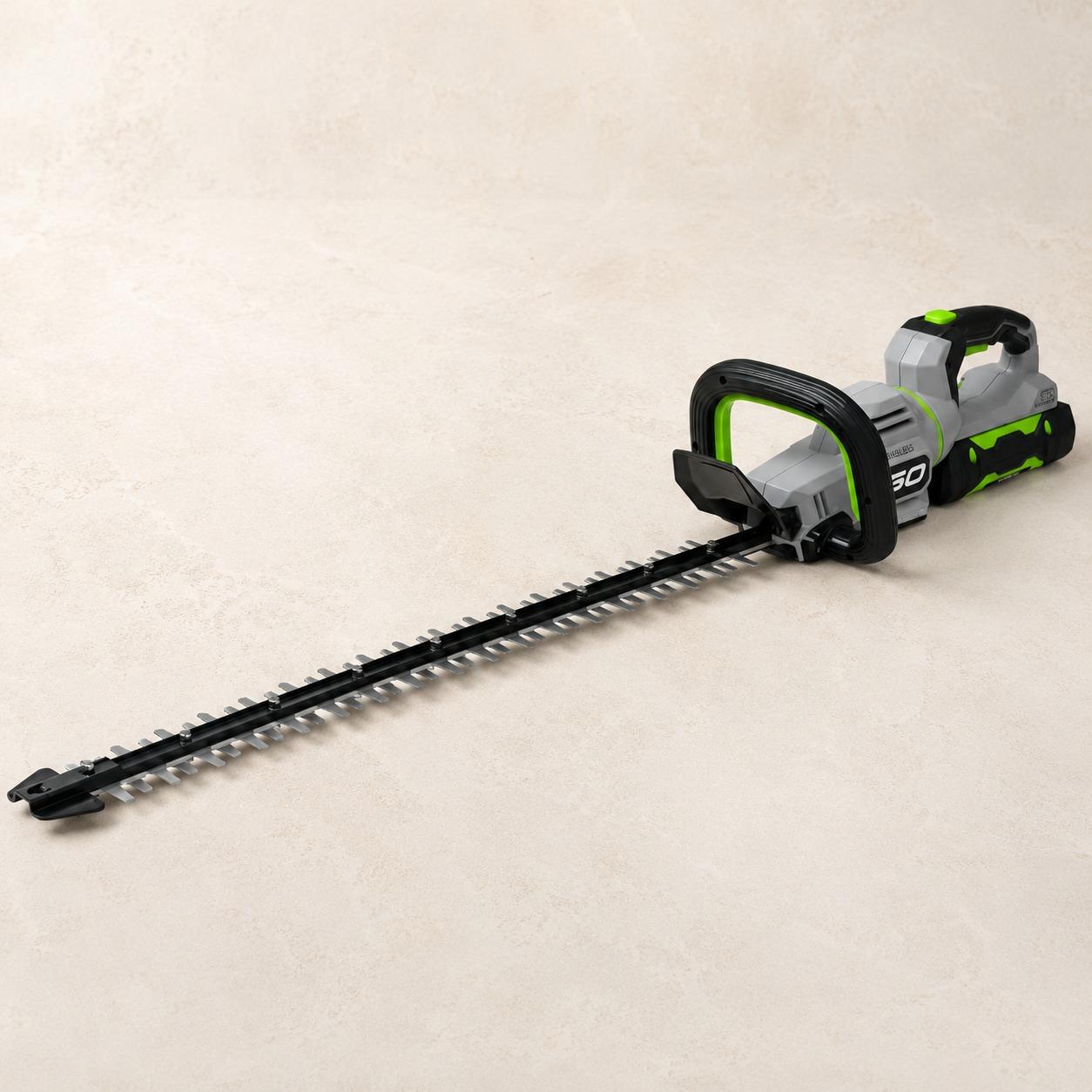
EGO POWER+ HT2601
“Its long blade makes it a strong match for broad hedge faces, covering more growth with each pass than a shorter trimmer. However, buyers should consider its overall length and battery weight”
Check Price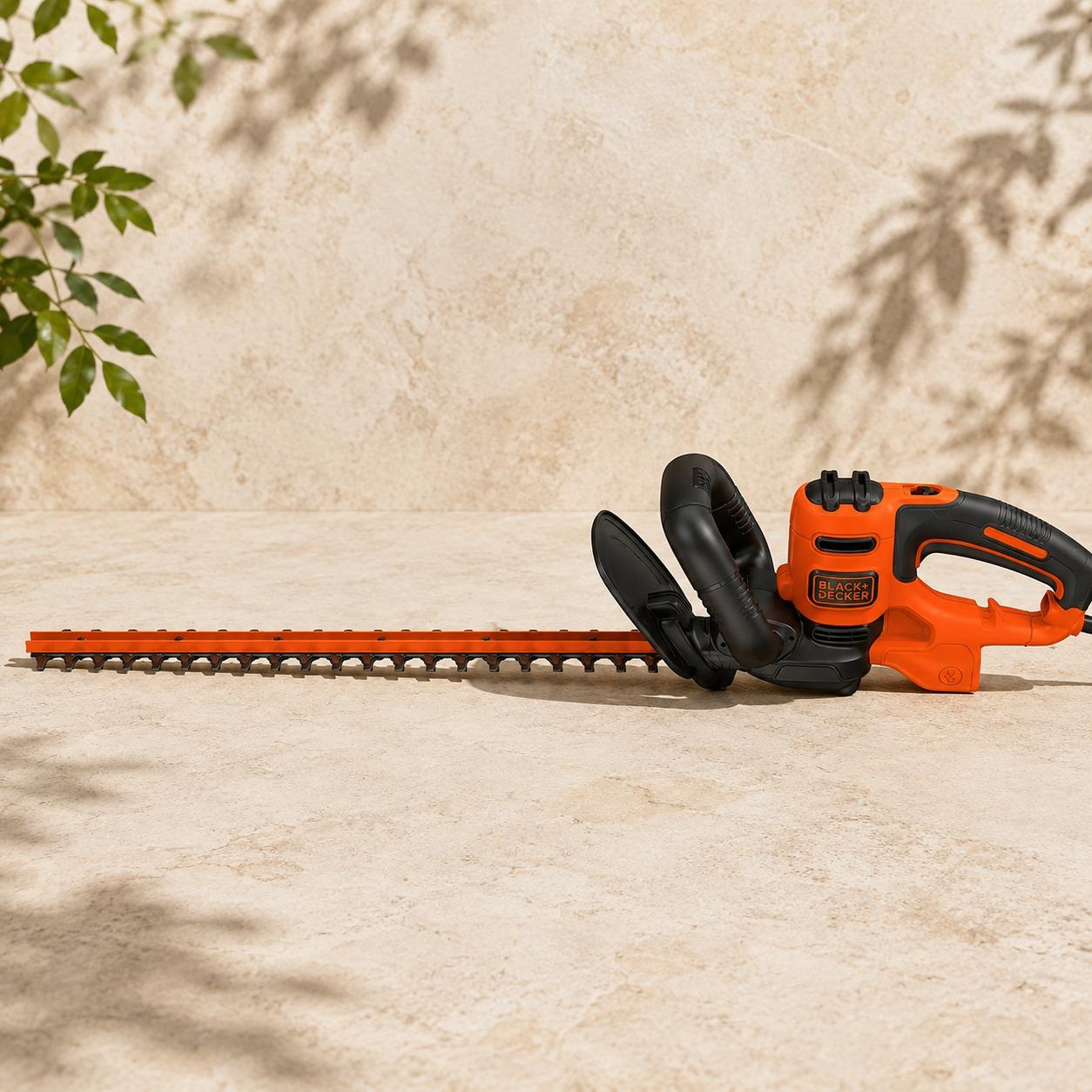
BLACK+DECKER BEHT350FF
“A practical option for routine trimming where there is a clear cable route from the outlet to the hedge. Its corded design provides continuous power without battery charging, but the cable restricts range and movement around the garden.”
Check Price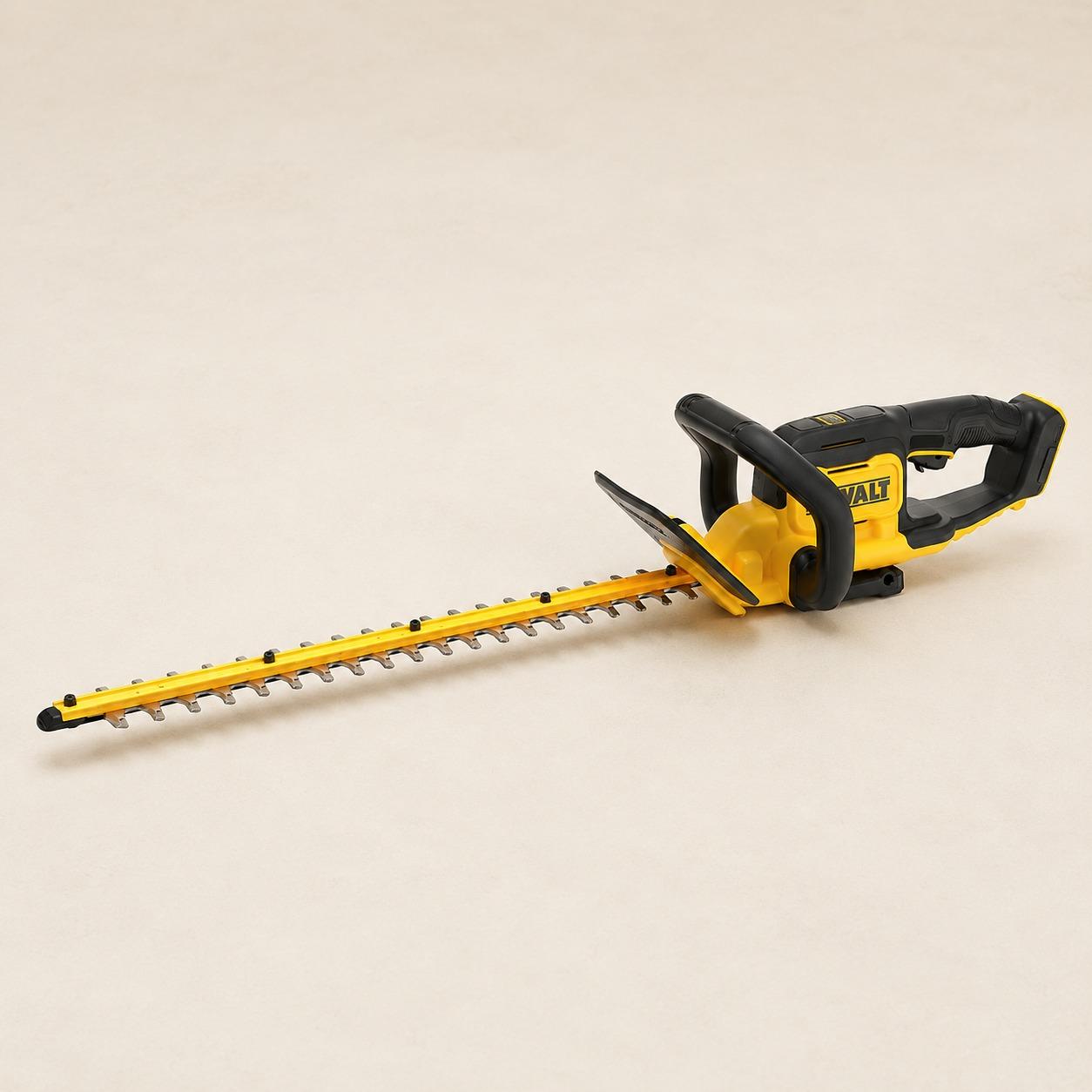
DEWALT DCHT821B
“A practical addition for anyone who already owns compatible DEWALT 20V MAX batteries. It avoids the cost of another battery system, but new buyers will still need to purchase a battery and charger.”
Check PriceWe compared exact models and packages by blade length, stated cut capacity, working weight, power format, handling features, warranty support, and recall status.
| Product | Best For | Power | Blades | Stated cut capacity | Weight | Check |
|---|---|---|---|---|---|---|
| EGO POWER+ HT2601 | Wide, mature hedges | 56V battery kit | 26 in. | 1.2 in. | 6.92 lb. without battery | Check Price |
| DEWALT DCHT821B | DEWALT battery owners | 20V MAX, tool only | 22 in. | 3/4 in. | Not published | Check Price |
| BLACK+DECKER BEHT350FF | Compact gardens near an outlet | 120V corded, 4.0 amp | 22 in. | 3/4 in. | 6.5 lb. | Check Price |
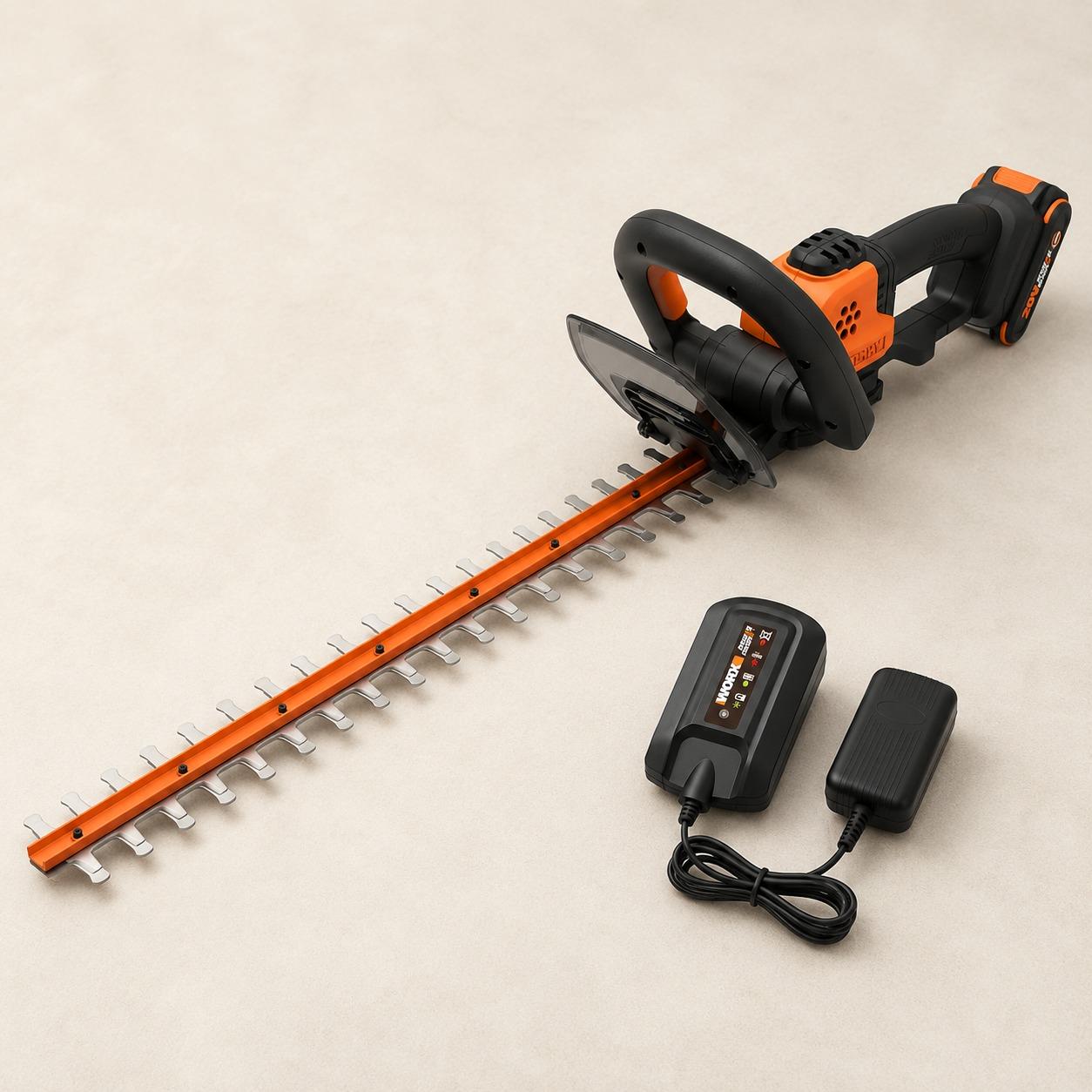
| WORX WG261 | Lighter cordless trimming | 20V battery kit | 22 in. | 3/4 in. | 5.5 lb. with battery | Check Price |
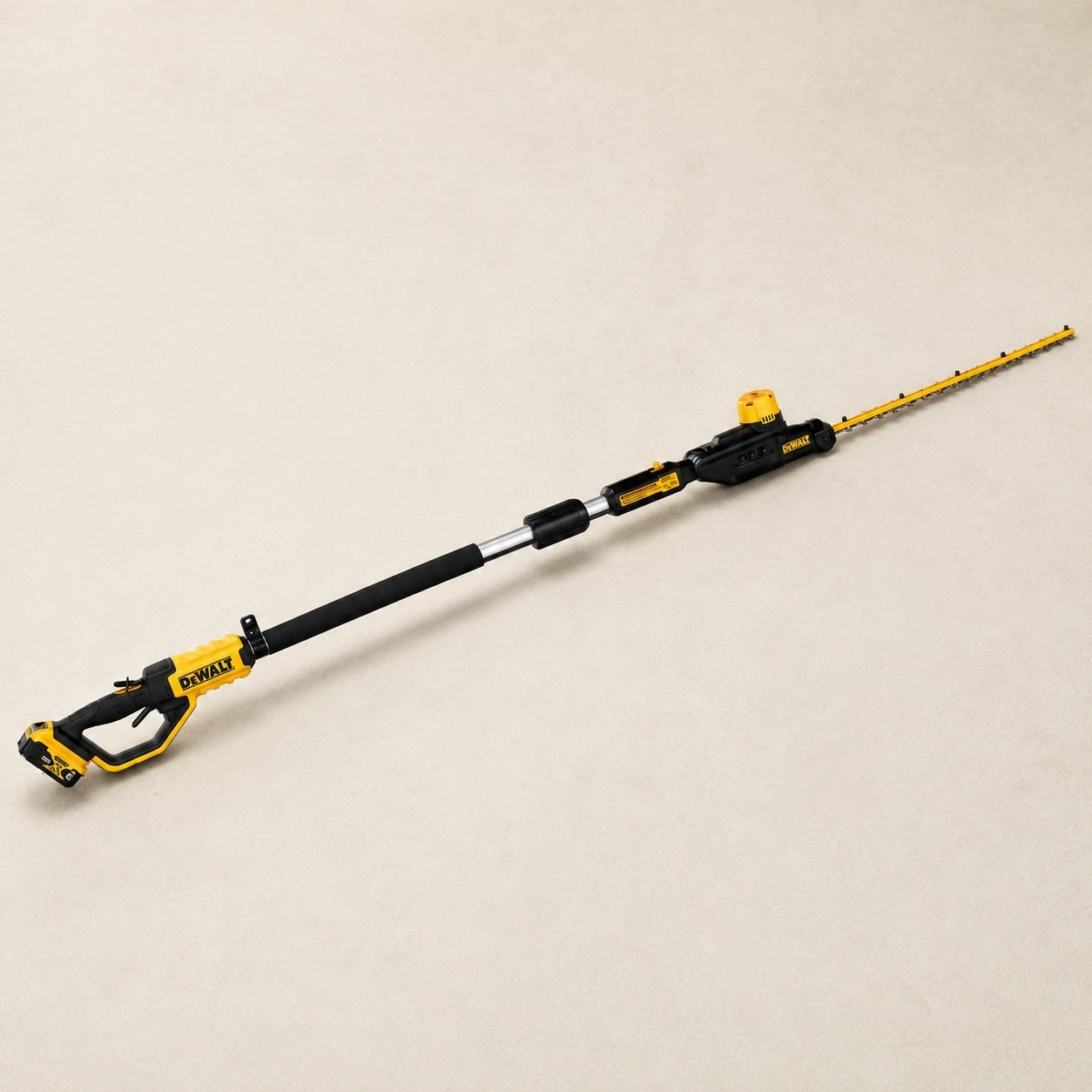
| DEWALT DCPH820M1 | Tall hedge faces and tops | 20V MAX battery kit | 22 in. | 1 in. | Not disclosed on current product page | Check Price |
Our five recommended hedge trimmers#
The reviews below show where each model works best and what you give up in return. Start with your hedge size and access to power, then compare blade length, working weight, reach, and whether the package includes a battery and charger.
EGO POWER+ HT2601
The EGO POWER+ HT2601 suits broad hedges where its 26-inch blade covers more growth in each pass. Its rotating rear handle supports horizontal and vertical cutting, while the stated 1.2-inch capacity leaves room for maintained woody stems. The kit includes a 2.5Ah battery and charger, but the listed weight of 6.92 pounds excludes the battery.
DEWALT DCHT821B
The DEWALT DCHT821B makes the most sense for buyers who already own compatible 20V MAX batteries. Its 22-inch blade suits routine hedge trimming, while the stated 3/4-inch cutting capacity covers regularly maintained growth. This package includes the trimmer only, so first-time DEWALT buyers face extra battery and charger costs.
BLACK+DECKER BEHT350FF
The BEHT350FF is a sensible corded choice when every hedge is within easy reach of an outdoor outlet. Its 22-inch blade and 3/4-inch stated capacity suit routine work in compact gardens, while the 6.4-pound weight remains manageable. Cord retention reduces accidental unplugging, but it does not remove the need to control the extension lead.
WORX WG261
The WORX WG261 is a practical cordless choice when lower working weight matters more than extra blade length or cutting capacity. Its published 5.5-pound weight includes the battery, while the 22-inch blade suits routine hedge trimming. The kit includes a 2.0Ah battery and charger, making it a complete package for first-time buyers.
DEWALT DCPH820M1
The DEWALT DCPH820M1 is a practical choice for tall hedge faces and tops that are difficult to reach with a standard trimmer. Its seven-position articulating head lets you adjust the cutting angle, while the kit includes a 4.0Ah battery, charger, shoulder strap, and blade sheath. The extended pole adds reach but is less suited to close trimming.
Which type of hedge trimmer do you need?#
Hedge trimmers come in four practical options: cordless, corded, gas, and pole trimmers. Consider how far your hedges are from a power source, how high you need to reach, and how long you expect to work at a time.
Cordless trimmers
Cordless hedge trimmers give you the freedom to move between hedges without managing a power cable. They make sense when an outlet is too far away or the route around the garden is awkward. The battery adds to the purchase cost and working weight, while runtime limits how long you can trim before recharging or changing batteries.
Corded trimmers
Corded hedge trimmers provide continuous power without stopping to recharge a battery. They work best where an outdoor outlet is nearby and the cable has a clear route to the hedge. The cord restricts how far you can move and needs to stay clear of the cutting area while you work.
Gas trimmers
Gas hedge trimmers avoid battery runtime and charging limits, making them an option for larger or more demanding trimming jobs. They can also be used away from an electrical outlet. Compared with electric models, gas trimmers require fuel handling and engine maintenance and produce more noise and exhaust.
Pole trimmers
Pole hedge trimmers extend the cutting blade beyond the reach of a standard model, helping you work on tall hedge faces and tops from the ground. Some also let you change the blade angle for top and side cutting. The longer shaft can be less manageable for close work and detailed shaping.
How to choose a hedge trimmer?#
Start with the hedge itself before comparing tool specifications. Its length, height, width, and stem thickness help determine the blade size, reach, power source, and cutting capacity you actually need.
Measure the area you need to cover
A few compact or shaped shrubs do not need the same blade length as a long boundary hedge. Longer blades cover more growth with each pass, while tall hedges may call for a pole trimmer for extra reach. Also consider whether you trim regularly or let stems thicken and wood up between sessions.
Budget for the complete setup
Compare the cost of everything needed to start trimming, not just the tool. Depending on the model, that may include a battery, charger, outdoor extension cord, fuel, shoulder strap, or blade sheath. A low bare-tool price may offer less value if you need to buy essential parts separately.
Check whether a cord can reach safely
Consider a corded hedge trimmer only if the cable can reach every hedge without crossing busy paths, wrapping around obstacles, or getting close to the cutting area. Cordless models remove the cable restriction, which can make them more practical around gates, sheds, corners, and separate planting areas.
Compare blade length and cutting capacity separately
Blade length affects how much hedge you can cover in each pass. Cutting capacity refers to the manufacturer’s stated maximum stem or branch thickness. A longer blade suits broad hedge faces, while a shorter blade may be more practical for compact shrubs and detailed shaping.
Consider handle design and cutting position
Handle design matters when you move between the top and sides of a hedge. A rotating rear handle lets you change the grip position for horizontal and vertical cutting. With a pole hedge trimmer, compare the available head angles, reach, and complete working weight rather than looking at reach alone.
Check what the cordless package includes
Confirm the exact battery platform, capacity, charger, and package before buying. A bare tool can make sense if you already own compatible batteries. If you are starting with a new battery platform, compare the complete setup cost with a cordless hedge trimmer kit that already includes the battery and charger.
Frequently Asked Questions about Hedge Trimmer#
These questions often come up after comparing blade length, cutting capacity, power source, working weight, reach, and package contents.
Is a cordless hedge trimmer worth it for a small yard?
Yes, if managing an extension cord would make the job awkward. For a short hedge near an outlet, a corded model such as the BLACK+DECKER BEHT350FF eliminates battery charging. Cordless hedge trimmers become more useful when you need to move around gates, corners, obstacles, or separate hedge areas.
Should I stay with the battery brand I already own?
Staying with your current battery platform makes sense when its hedge trimmer suits the job. The DEWALT DCHT821B makes sense for owners who already have compatible 20V MAX batteries and a charger. Battery compatibility should still come after practical factors such as blade length, working weight, reach, and handle design.
Does higher voltage mean better cutting?
Not by itself. Voltage identifies the tool’s power system, but it does not tell you whether a hedge trimmer is the right match for your hedge. Compare blade length, stated cutting capacity, complete working weight, handle design, and battery setup alongside voltage.
Do I need a pole trimmer for a 10- or 12-foot hedge?
A pole hedge trimmer becomes useful when the top or upper face is beyond comfortable reach with a standard model. The DEWALT DCPH820M1 advertises a maximum reach of 12 feet, but that figure is based on a 6-foot user holding the pole straight at shoulder level. Treat the 12-foot figure as a reach estimate rather than the physical length of the tool.
Can a hedge trimmer cut a 1-inch branch?
Use a model with a stated cutting capacity of at least 1 inch for a branch of that diameter. Even then, the specification represents the manufacturer’s stated maximum cutting capacity rather than a guarantee that every 1-inch branch will cut the same way.
How can I keep the extension cord away from the blade?
Plan the cable route before trimming and keep the extension cord clear of the cutting area. The cord-retention feature on the BLACK+DECKER BEHT350FF helps prevent accidental unplugging, but it does not protect the cable from the blade. Use an outdoor-rated extension cord with an appropriate wire gauge for its length.
Which hedge trimmer should you buy?#
Start with the size, shape, and height of your hedges. The EGO POWER+ HT2601 is our leading choice for broad hedge faces where its 26-inch blade can cover more growth with each pass. Its five-position rotating rear handle also supports different cutting positions. Keep working weight in mind, since the published 6.92-pound tool weight excludes the battery.
For smaller, regularly maintained hedges, the WORX WG261 offers a lighter cordless setup, with a published 5.5-pound weight including the battery. A corded hedge trimmer makes sense when your hedges are within easy reach of an outlet and the cable has a clear route. Choose a pole hedge trimmer when extra reach is the main requirement; for ordinary hedge faces, a standard-length model is usually more practical.