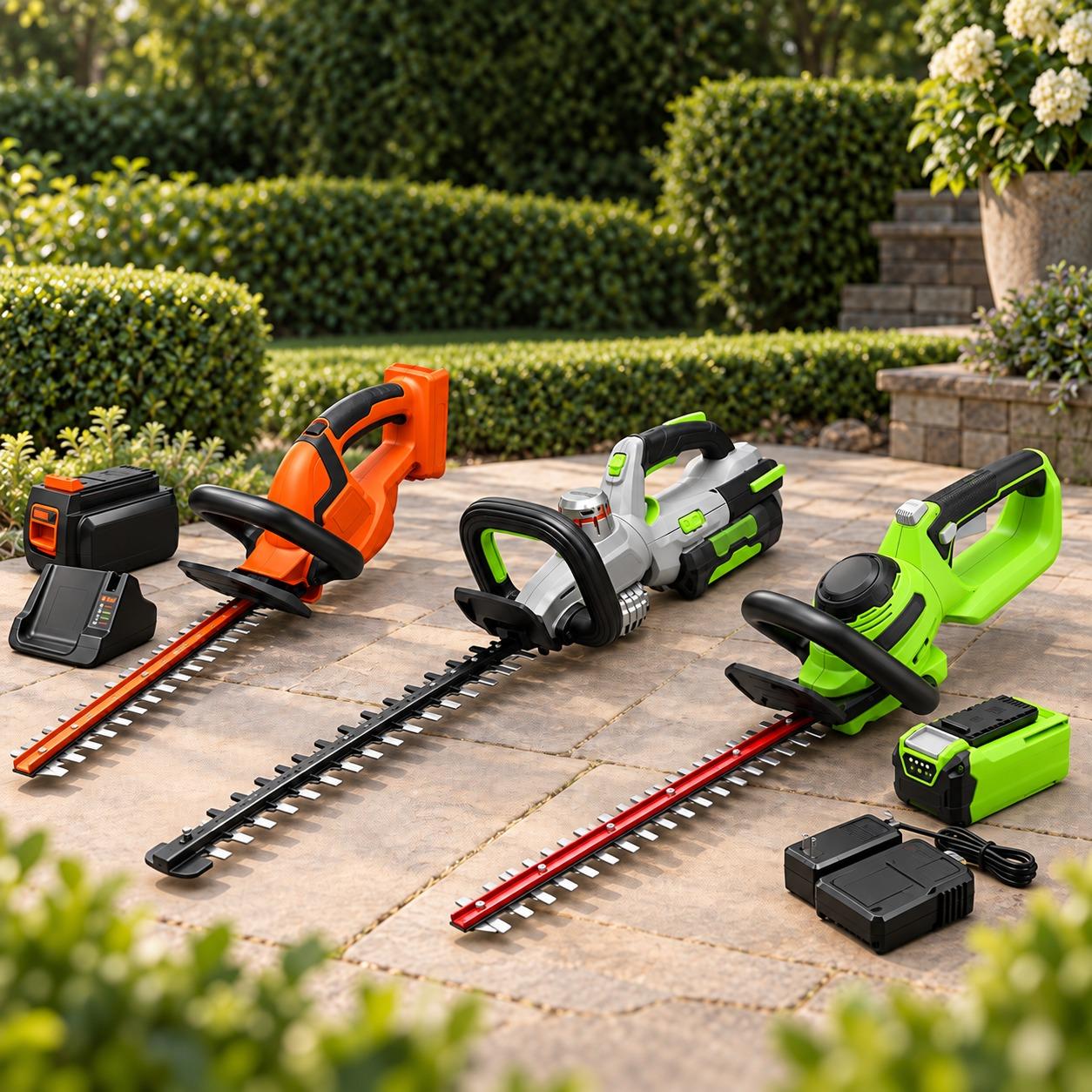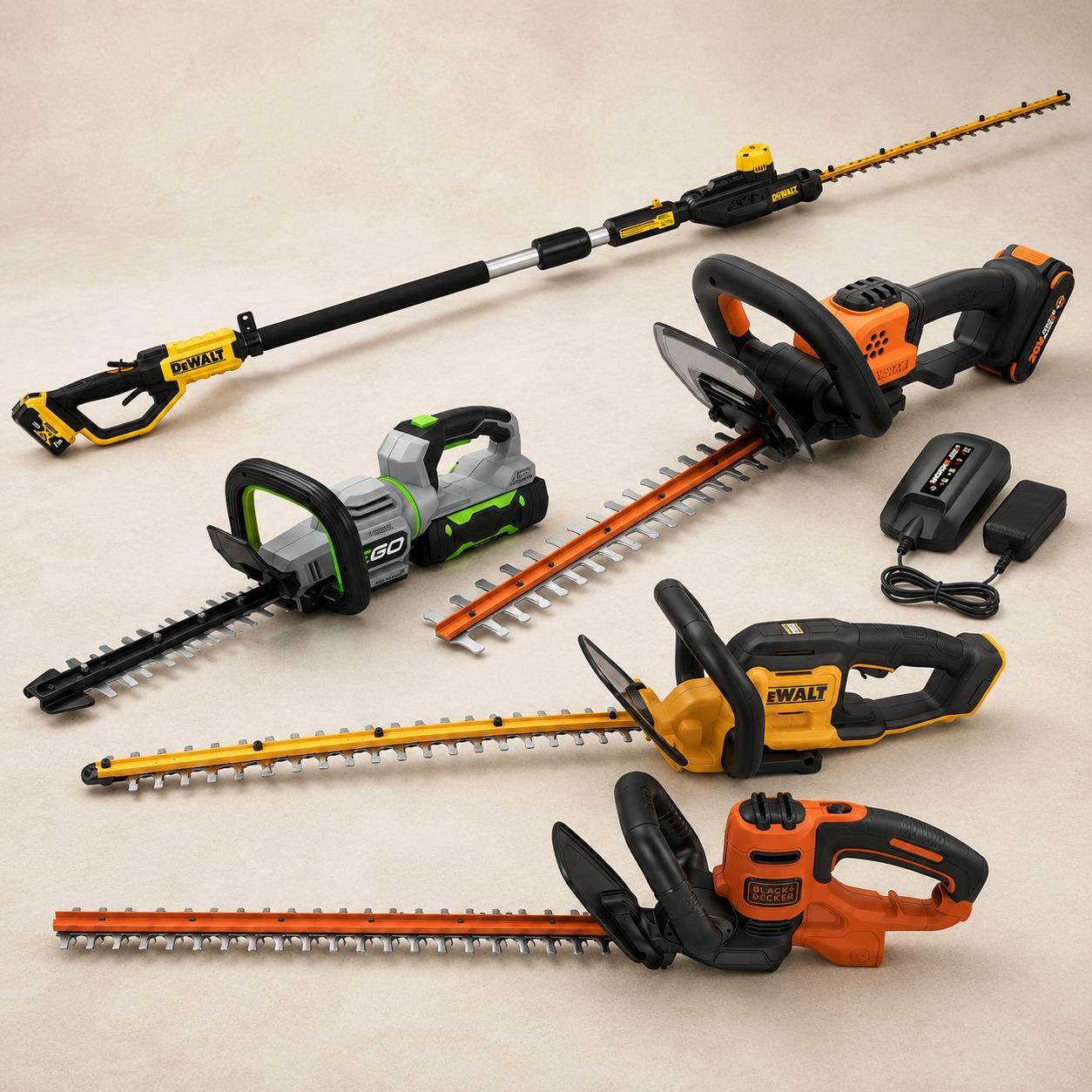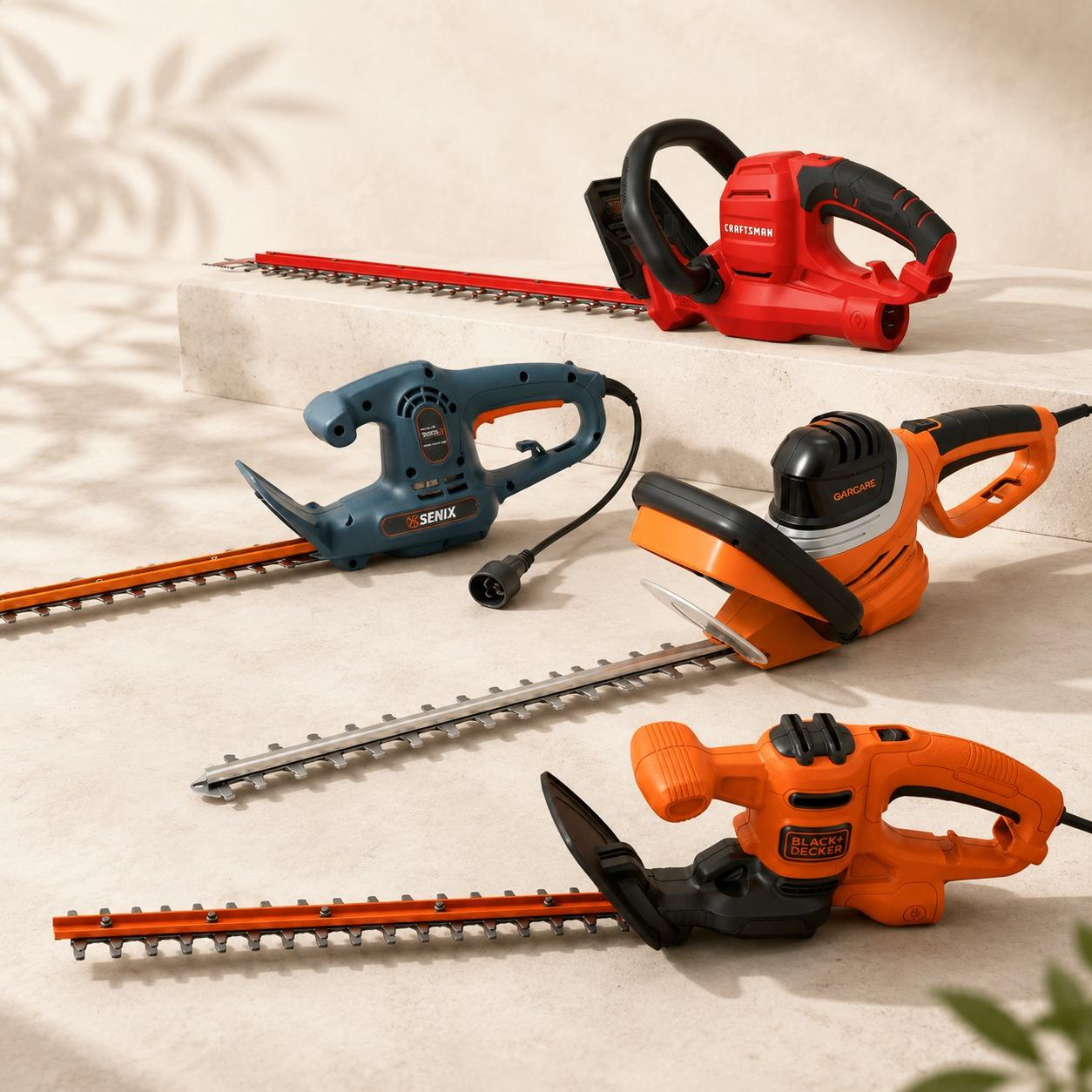
A corded hedge trimmer is a practical option when your hedges and shrubs are within reach of an outdoor power outlet. It delivers consistent power throughout the job, so there is no need to pause to recharge a battery. However, cord placement requires some planning. A suitable extension cord adds to the overall cost and can be awkward to manage around gates, pathways, corners, and garden furniture.
The right blade size depends on the hedges you need to trim. A 22-inch blade covers wider hedges with fewer passes, while a shorter blade usually offers better control around small shrubs and compact spaces. Weight is another important factor, particularly when trimming tall hedges or holding the tool at
shoulder height. Branch-capacity ratings can help you compare models, but thick, woody branches are usually better cut with loppers or a pruning saw.
This guide compares some of the best corded hedge trimmers available in the US. We evaluate each model based on cutting performance, comfort, safety features, setup cost, availability, and customer support. The Top 3 picks provide quick recommendations, while the full comparison and detailed reviews help you choose the right trimmer for your hedge size and trimming requirements.
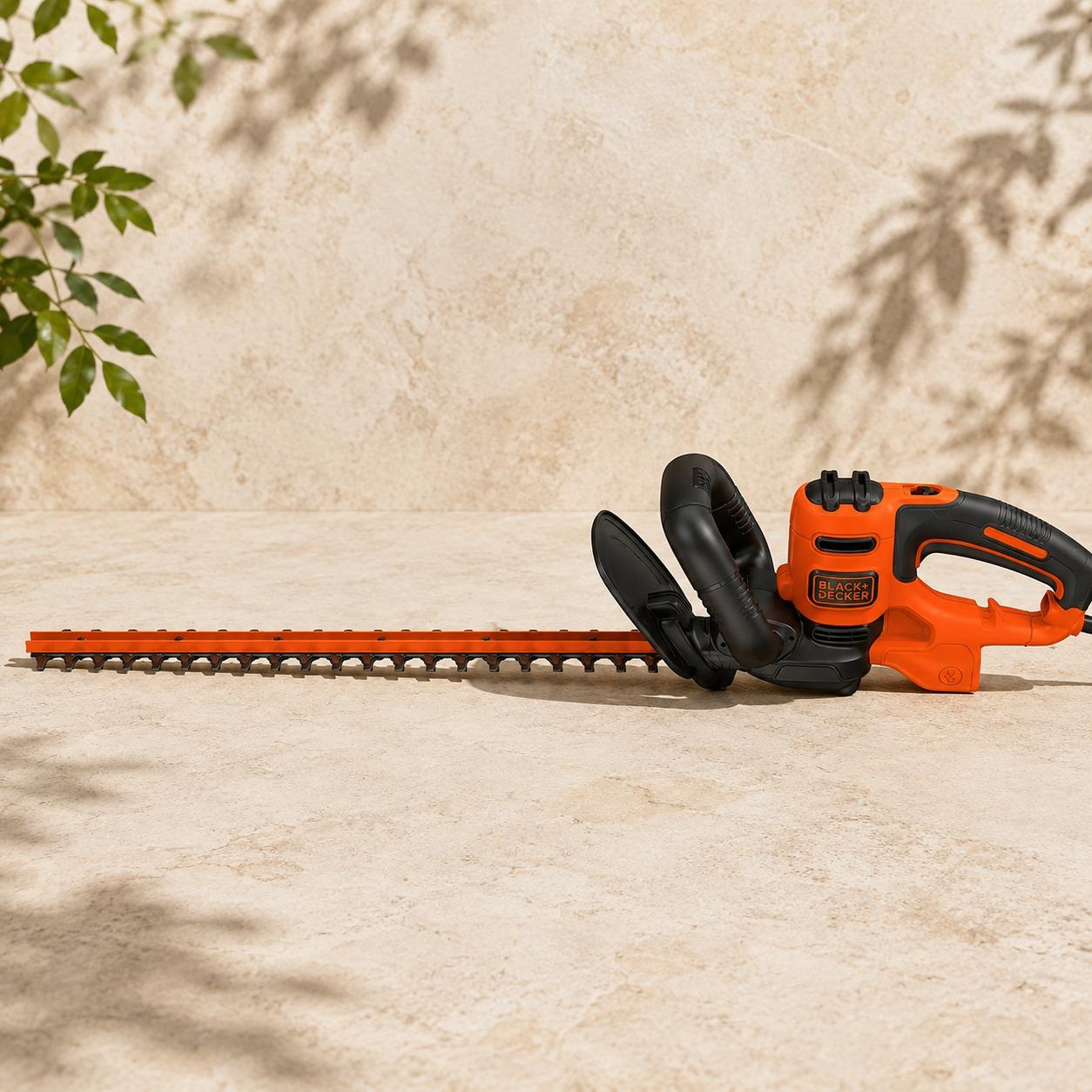
BLACK+DECKER BEHT350FF
“The strongest fit for most small- to medium-sized yards near an outlet. Its 22-inch blade balances broad coverage with manageable weight, while the wraparound handle supports both top and side cuts.”
Check Price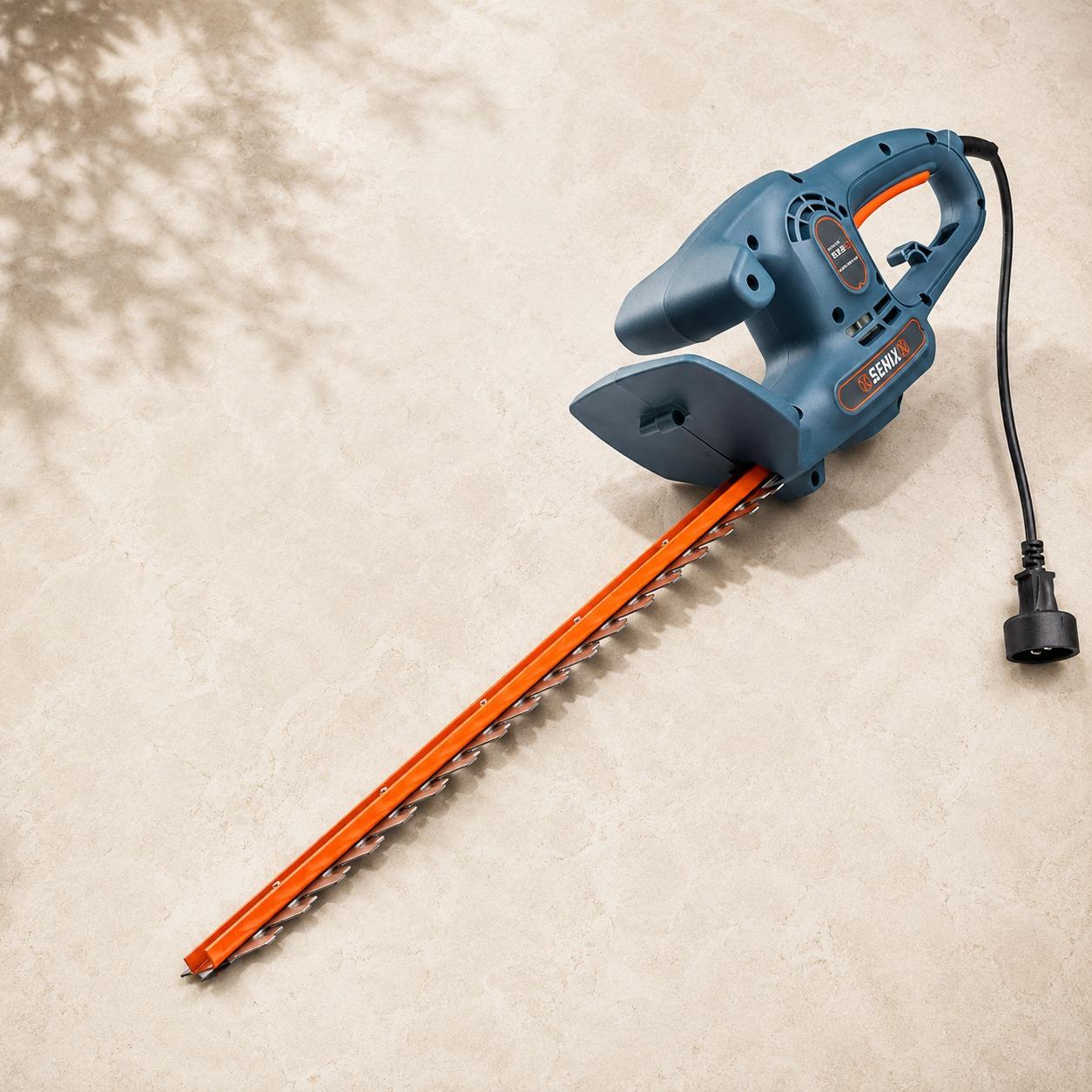
SENIX HTE3.8-L
“At an Amazon-listed weight of 5.29 pounds, the SENIX HTE3.8-L is the lightest full-size model in our ranking. Its official manual confirms a 3.8-amp motor and a maximum cutting diameter of 0.7 inches. However, the product listing and manual provide different blade-length specifications.”
Check Price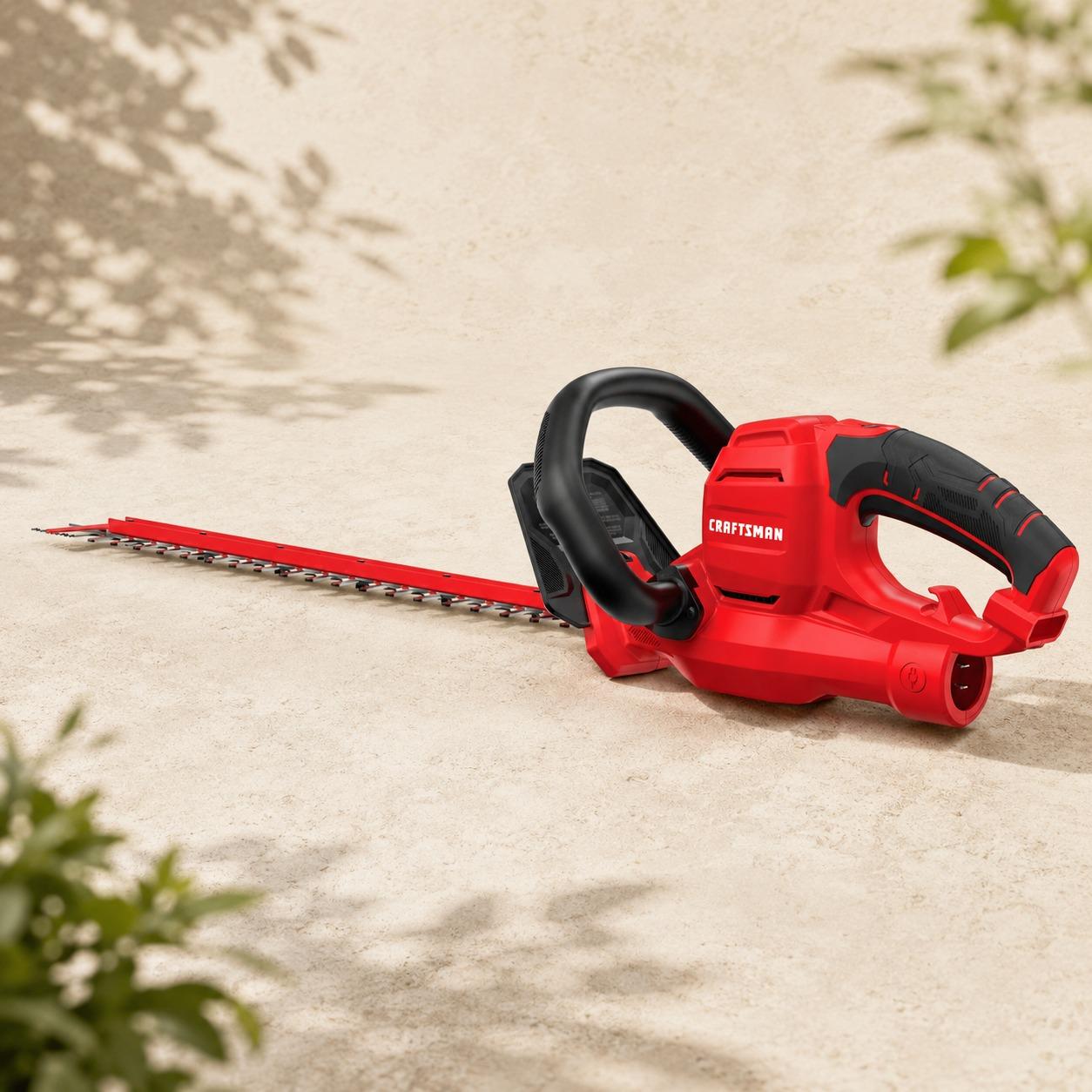
CRAFTSMAN CMEHTS8022
“A practical option when routine shaping is interrupted by an occasional thicker stem. Its 22-inch blade provides full-size cutting coverage, while the separate Power Saw tip is designed for isolated branches rather than regular woody pruning.”
Check PricePrices and availability can change, and manufacturers may test cutting capacity under different conditions. Begin by considering your yard layout. Then compare blade length, cutting capacity, working weight, and the extension cord length needed to reach every hedge.
| Product | Best use | Motor | Blade | Stated capacity | Manufacturer-listed weight | Check |
|---|---|---|---|---|---|---|
| BLACK+DECKER BEHT350FF | Most small and medium yards | 4.0 amp | 22 in. | 3/4 in. | 6.5 lb. | Check Price |
| CRAFTSMAN CMEHTS8022 | Hedges with occasional thicker branches | 3.8 amp | 22 in. | 3/4 in.; Power Saw up to 1.5 in. | 6.8 lb. | Check Price |
| SENIX HTE3.8-L | Full-size trimming at lower listed weight | 3.8 amp | 22-in blade; 20-in cutting length | 0.7 in. | 5.29 lb. | Check Price |
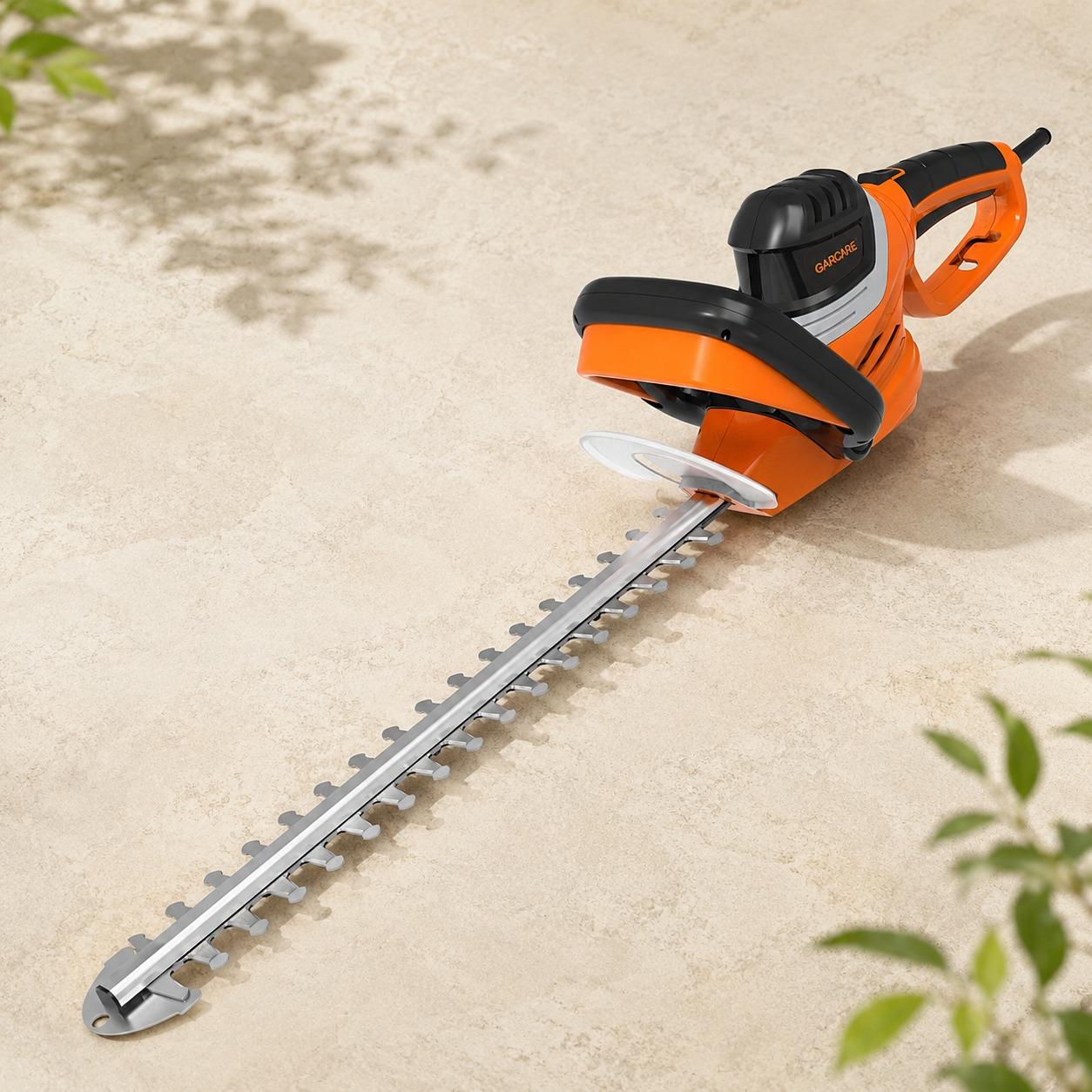
| GARCARE GHT08 | Broad hedges and repeated angle changes | 4.8 amp | 24 in. | 18mm | 7.04 lb. | Check Price |
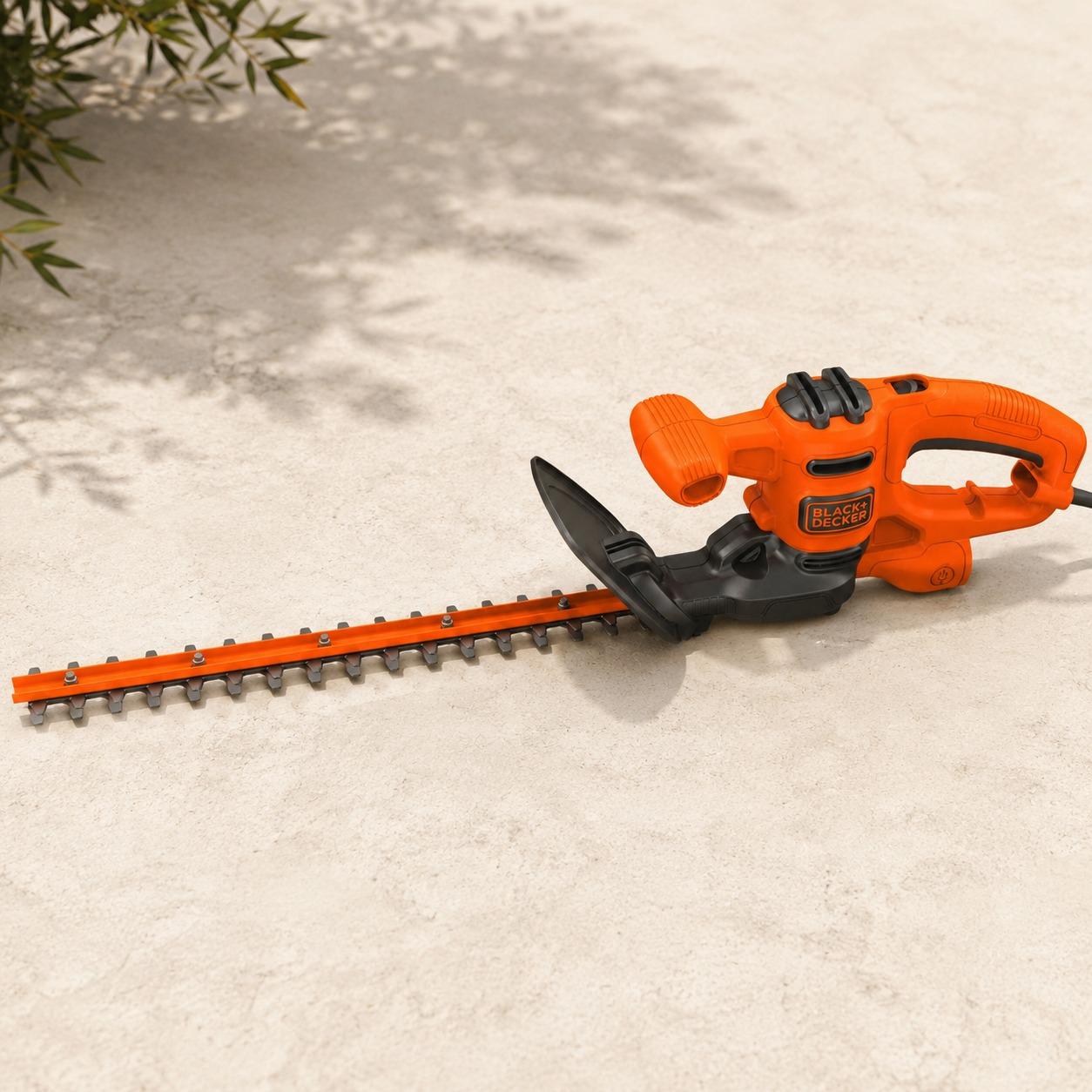
| BLACK+DECKER BEHT100 | Small shrubs and tighter shaping | 3.0 amp | 16 in. | 5/8 in. | 4.9 lb. | Check Price |
These figures are useful for comparing models, but actual performance can vary depending on the wood type, moisture level, and blade condition. Each recommendation is supported by current evidence for the exact model and has a clear reason for inclusion.
BLACK+DECKER BEHT350FF
The BLACK+DECKER BEHT350FF offers a practical mix of cutting reach, control, and value for small to medium-sized yards. Its 22-inch blade covers wider hedges in fewer passes, while the 3/4-inch cutting capacity suits routine maintenance. The wraparound handle supports top and side cuts, and the built-in cord retainer helps prevent accidental unplugging while you move along a hedge.
CRAFTSMAN CMEHTS8022
The CMEHTS8022 replaces the unavailable BEHTS300 with the same distinct saw-tip job and a longer 22-inch blade. CRAFTSMAN specifies a 3.8-amp motor, 3/4-inch standard cutting capacity, and a Power Saw tip for occasional branches up to 1.5 inches. Its listed weight of about 6.8 pounds makes it heavier than the lightweight options in this guide, and the saw feature does not replace pruning tools.
SENIX HTE3.8-L
The SENIX HTE3.8-L provides full-size hedge coverage at a 5.29-pound Amazon-listed weight. Its exact manual specifies a 3.8-amp motor, 0.7-inch maximum diameter, cord restraint, and two-hand controls. The manual distinguishes a 22-inch blade from a 20-inch cutting length, so the guide keeps both measurements instead of merging them.
GARCARE GHT08
The GARCARE GHT08 combines the longest blade in this group, at 24 inches, with a rotating rear handle that supports different positions for trimming hedge tops and sides. GARCARE lists a 4.8-amp motor, 18mm stated capacity, and a 7.04-pound product weight. The extra reach suits broad, flat hedge faces, but it is less maneuverable than a compact trimmer in confined garden spaces.
BLACK+DECKER BEHT100
The BLACK+DECKER BEHT100 is a practical option for homeowners who need to maintain two or three small shrubs and may find a longer blade harder to control. Its 16-inch blade and listed weight of 4.9 pounds make it easier to work around corners, shape ornamental shrubs, and trim in confined spaces. The compact design also requires less storage space, although trimming a wide hedge will take more passes than with a 20- or 22-inch model.
Which corded hedge trimmer type fits your yard?#
Corded hedge trimmers provide continuous household power, but blade length and additional cutting features affect how each model handles. Choose the simplest design that reaches and trims your hedges accurately.
Standard 22-inch trimmers
A 22-inch blade covers broad hedge surfaces in fewer passes and can reach across deeper shrubs. This size suits a long, flat boundary hedge in a small or medium yard. However, the extra length can feel awkward around tight corners and ornamental shapes.
Compact 16-inch trimmers
A shorter blade keeps the cutting area closer to your hands and improves placement in narrow gaps. It makes sense for maintaining a few ornamental shrubs near a porch. It will take longer to trim wide hedge surfaces because each pass covers less area.
Saw-tip hybrid trimmers
A saw tip provides a separate way to cut an occasional branch that is too thick for the standard blade teeth. It suits mixed maintenance where a few thicker stems interrupt, otherwise routine shaping. The higher purchase price is difficult to justify if you already own suitable loppers or a pruning saw.
Rotating-handle 24-inch trimmers
A rotating rear handle changes wrist position as you move between long horizontal sweeps and vertical cuts. A 24-inch blade suits broad, regularly maintained hedges where coverage is important. The extra length is less useful around small ornamental shrubs or confined corners.
Lightweight full-size trimmers
A lower listed weight can reduce the load during repeated vertical and shoulder-height passes without requiring you to switch to a compact blade. This format suits maintained medium hedges where coverage and fatigue both matter.
How to choose the best corded hedge trimmer for your yard#
A corded tool is a layout decision, not a motor size decision. Measure the full trimming area and calculate the cost of the complete setup before comparing small differences in specifications.
Map the outlet-to-hedge route
Measure from a suitable outdoor outlet to the farthest area you need to trim. Follow the safe route the cable will actually take because corners, gates, paths, and separate beds add distance.
Budget for the extension cord
Add the price of an outdoor-rated extension cord with the gauge and maximum length required by the tool manual.
Match blade length to hedge width
A 22-inch blade is efficient on broad, flat hedge faces. A 16-inch blade is easier to position around smaller shrubs and detailed shapes. A longer blade is not always better if the extra length makes the tool harder to control in the spaces you maintain.
Treat cut capacity as a limit, not a target
A 3/4-inch rating describes the tool’s stated maximum cutting capacity. It does not mean you should force the trimmer through every woody branch of that size.
Compare working weight and handles
Manufacturer-listed weights do not reveal how balanced a trimmer, but they can help narrow your options. A lighter tool may be easier during vertical cuts and shoulder-height work. Wraparound or bale handles give your front hand more positions as you move between the top and face of a hedge.
Check the safety controls
Check for a blade guard, two-hand or lock-off control, cord retention, and a blade sheath. Read the exact manual before buying because cord gauge, outlet protection, maintenance, and operating instructions can differ. A cord retainer prevents accidental unplugging; it does not keep the cable away from the blade.
Frequently Asked Questions#
Are corded hedge trimmers more powerful than cordless models?
Not necessarily. Amps and battery voltage describe different electrical systems and do not provide a direct performance comparison. Cutting ability also depends on blade design, stroke rate, gearing, branch condition, and the tool as a whole. Corded models mainly offer continuous mains access while connected rather than a universal cutting-power advantage.
What extension cord does a hedge trimmer need?
Use an outdoor-rated extension cord whose gauge and maximum length meet the exact tool manual. Longer runs may require thicker wire. Inspect the cord before each job, keep connections dry, and do not treat a household indoor cord as an acceptable substitute.
Can a hedge trimmer cut 1-inch branches?
Use loppers or a pruning saw for regular 1-inch branches. Most standard corded trimmers in this guide are not designed for that work. CRAFTSMAN rates the CMEHTS8022 Power Saw tip for occasional branches up to 1.5 inches.
Is a 22-inch blade too long?
A 22-inch blade is useful for broad hedge faces but can feel excessive around small shrubs and confined corners. Choose it when coverage and reach matter. A 16- to 18-inch model is usually easier to position for detailed shaping.
Is a corded hedge trimmer worth buying in 2026?
Yes, when the entire hedge is close to a suitable outlet and you value low purchase cost and uninterrupted runtime. Cordless is the better fit when cable routing is awkward, the property is large, or hedges sit far from an electrical outlet.
Final decision#
Choose corded power only if the cable route is simple. When it is, the BLACK+DECKER BEHT350FF offers the best balance of coverage, capacity, handling, and value. SENIX is the lighter full-size choice, GARCARE adds a 24-inch blade and rotating handle, and the BEHT100 is easier to guide around compact shrubs. Choose the CRAFTSMAN CMEHTS8022 only when its Power Saw tip solves a real occasional branch-cleanup problem. Include the correct outdoor extension cord in your budget and final buying decision.